Reading a model’s spatial clues may help explain wrong answers
The authors ask whether models keep an internal sense of where objects are. Imagine asking whether an apple sits left of a cup. They…
ISSUE 17/2026 · 13-10-2026
The authors ask whether models keep an internal sense of where objects are. Imagine asking whether an apple sits left of a cup. They found three directions inside model activity that track left–right, above–below, and close–far positions. They call this pattern S-Space…
3 paper · Original sources linked in every story
5 MINUTES ON PtoP
An AI system can have the right information somewhere inside it and still give the wrong answer. In a preprint about image questions, the authors found a pattern in model activity that tracks where objects are. Yet the model’s direct answers to questions about a different viewpoint were less accurate than answers produced by a separate method that read those positions and calculated the new view. That method does not show the model could make the calculation on its own. The distinction matters whenever an answer looks like proof that a system understood the task. See: Reading a model’s spatial clues may help explain wrong…
A related gap appears when AI writes tools for other AI. In another preprint, the authors asked coding agents to build or change agents, then tested the finished deliveries on cases the builders had not seen. Eleven Creation runs finished development with scores of 90 or above, but averaged 9.9 on the held-out Result measure. These are results for those runs and tests, not a forecast for every coding agent. They illustrate why a promising demonstration and a tool that handles a new request are different things. See: Test whether a coding agent delivers the tool you requested
Even judging what counts as a good result needs care. The authors of RewardHarness report that written judging guides built from 100 human examples helped an image-reading model rank edited images against human preferences. They also tested the guides as a score for training an image editor and reported a higher score for that editor on a separate test. Those are two different measures. The authors warn that a narrow set of examples could leave the guides too closely fitted to familiar cases. See: A Small Set of Examples Could Guide Image-Edit Judging
The distance between a study result and a benefit in daily life is especially clear in health care. Google says its system caught 25% of historically missed interval cancers in studies using breast X-rays. It describes reducing specialists’ reading work by up to 40% as possible, not established, and does not say whether wider use would improve patients’ health. Meanwhile, the BBC reports Microsoft president Brad Smith’s call for rules on reporting harmful AI incidents and deciding when products need outside review before release. His comparison with milk and washing machines is his argument, not a measurement the BBC presents. See: Applying technology to understand and treat disease · AI is less regulated than milk, Microsoft president says
Across these accounts, the useful question is not simply whether AI can do something impressive. It is what was actually checked: an internal clue or a final answer, a practice example or a fresh request, a study finding or a benefit for patients. If you use an AI tool this week, could you give it one slightly unfamiliar task and check its finished answer, rather than judging it by how confidently it begins? See: Reading a model’s spatial clues may help explain wrong… · Test whether a coding agent delivers the tool you requested · A Small Set of Examples Could Guide Image-Edit Judging · Applying technology to understand and treat disease
Just here for the stories? They are below, by topic.
PtoP · NEWSLETTER
Six papers and the news, explained in plain English, each morning after the editor approves the issue. Free, and you can unsubscribe at any time.
News and analysis from the sources, separate from the papers. Headlines and dates link to the originals.
THIS ISSUE AT A GLANCE
↗02 / NEW / EDITOR PICKSTest whether a coding agent delivers the tool you requestedThe study asks whether coding agents build tools that meet a request beyond the examples they practice…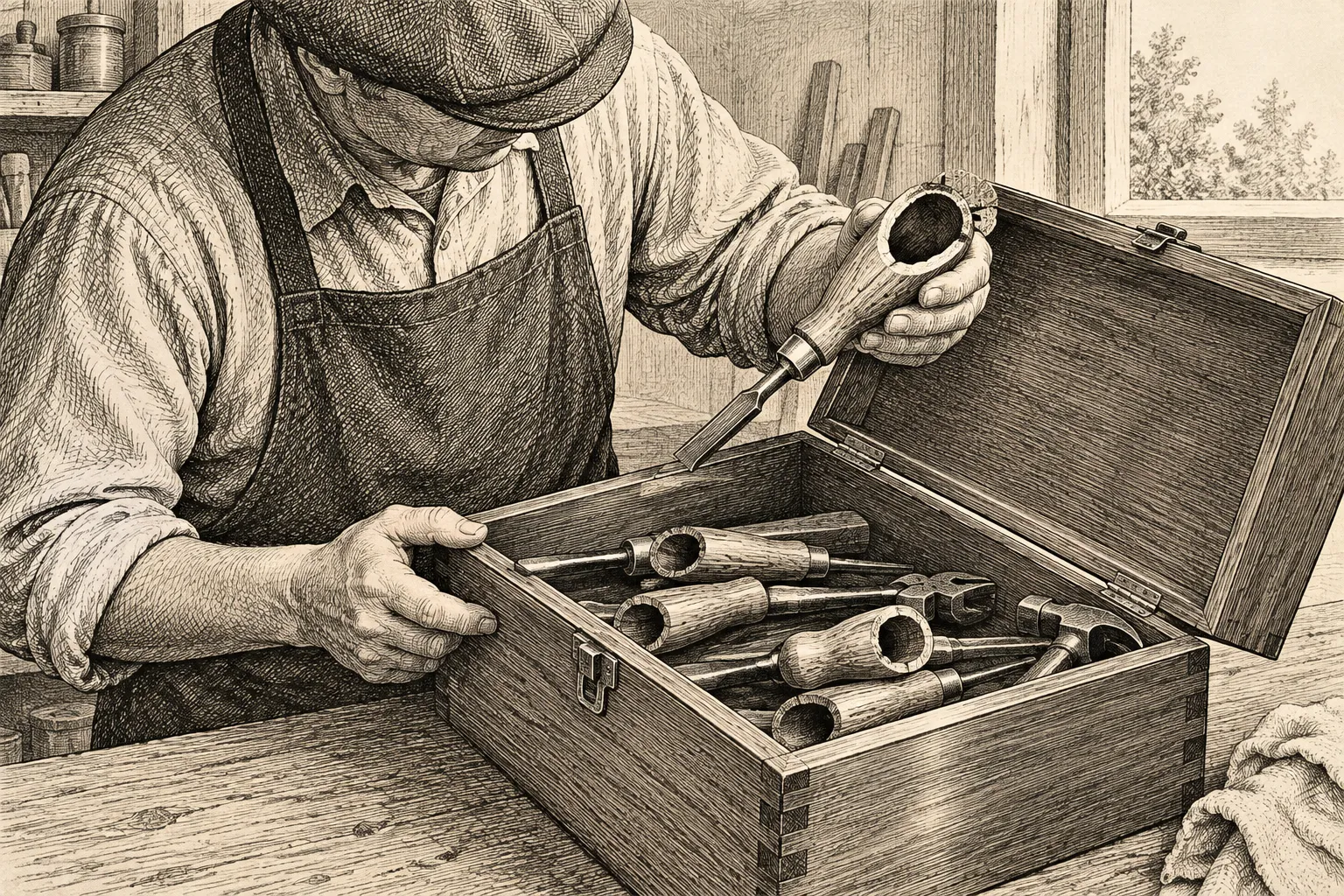 ↗03 / TOP VOTED · 6 MONTHSA Small Set of Examples Could Guide Image-Edit JudgingThe study asks whether an image judge can learn what people prefer without retraining its underlying…
 ↗
PODCAST / ENGLISH EDITION
The front-page episode covers the papers and news; each paper also has its own short conversation.
Both voices are AI-generated with OpenAI. This is a scripted editorial conversation, not a recording of the authors.
The authors ask whether models keep an internal sense of where objects are. Imagine asking whether an apple sits left of a cup. They…
The study asks whether coding agents build tools that meet a request beyond the examples they practice on. A coding agent is software…
The study asks whether an image judge can learn what people prefer without retraining its underlying model. Picture checking whether…
FROM THE NEWS DESK
Editorial explanations of the sources: examples and possible uses are distinguished from what the source establishes.
People and society Google · 12-10-2026 · company announcement
Google says its artificial intelligence (AI) tools help scientists study disease and doctors detect cancer. These computer tools look for patterns in data. In studies using breast X-rays, its system caught 25% of historically missed interval cancers. These cancers went undetected during earlier screening, or checks for cancer, and were found between regular checks.
Imagine a doctor reviewing a breast X-ray and asking a second reader to check it. As an illustration, an AI tool could flag an area that deserves another look.
Google says reducing specialists’ reading work by up to 40% is possible, not established. The page does not say whether wider use would improve patients’ health.
Google reports promising research tools, but finding missed cancers in studies does not prove wider benefits.
Google describes health research it conducts with hospitals, universities, and other research partners. Its tools look for patterns in medical images, genes, and other health data. Google wants those findings to help researchers develop treatments and support doctors. One example involves mammography, which uses breast X-rays to check for cancer. The page does not say whether the cancer-screening system is available for routine care.
Doctors might someday use such flags to decide which breast X-rays need closer review.
Was this explanation easy to understand?
Business and strategy xAI · 12-10-2026 · company announcement
xAI says one new subscription combines Grok, the coding tool Cursor, and X features. Paid plans also include Grok Bot, which xAI describes as a helper that can carry out tasks.
Imagine asking Grok for website ideas, then using Cursor to help write the code. On a paid plan, both activities would draw from the same allowance, according to xAI.
Other companies’ models in Cursor cost extra on eligible plans. Models are AI systems. xAI’s claims about better value have not been independently tested on this page.
The plan puts several tools on one bill, but customers should check the included allowance and extra charges.
xAI says the plan brings together services people previously signed up for separately. New customers can sign up now, with a wider global rollout planned over the next few days. Existing customers can keep their plans or switch when the option appears in their account settings. On paid plans, Grok and Cursor draw from one shared allowance for using xAI’s tools. A shared allowance is an amount of use available across both tools. xAI says the new plans offer better value than comparable older plans. But the page gives no independent comparison. The company also gives no date for moving customers who stay on older plans.
A small team could use one plan to brainstorm and write code, rather than buying separate plans.
Was this explanation easy to understand?
People and society BBC · 11-10-2026 · updated 12-10-2026 · news report
The BBC reports that Microsoft president Brad Smith wants stronger safety rules for AI. AI means computer systems that can act or answer. Smith says milk and washing machines face more safety rules than AI. He wants rules for reporting harmful incidents. He also wants rules for deciding when outside reviewers should approve products before release.
Imagine a company's digital helper accessing a customer's private records without permission. That helper would be an AI agent, a program that takes actions with limited human direction. Under Smith's proposal, the company would have to tell the affected person about the breach.
Smith's milk comparison is his claim. It is not a measured comparison presented by the BBC. The BBC does not say whether governments will adopt his proposals.
The BBC reports Smith's argument that voluntary company rules are not enough to keep AI safe.
The BBC says calls for AI rules grew after industry experts warned of serious risks. Microsoft president Brad Smith wants safety rules that apply across countries. He says companies should warn affected people when a rogue AI system breaches their systems. The BBC reports that Donald Trump favors companies setting their own rules. Trump says this would help US firms compete with Chinese rivals. The BBC does not say whether governments will adopt Smith's proposals.
Smith's proposal could lead companies to add an emergency brake, a way to pause AI. He also suggests independent government evaluators. These public reviewers, who are outside the maker, could check products before release.
Was this explanation easy to understand?
ENGLISH EDITION / PAPER 01 · NEW / EDITOR PICKS
Why it matters to youAn image-and-language model may track where objects are but answer a viewpoint question incorrectly. This study offers a way to inspect that gap. It could inform work with visual assistants.
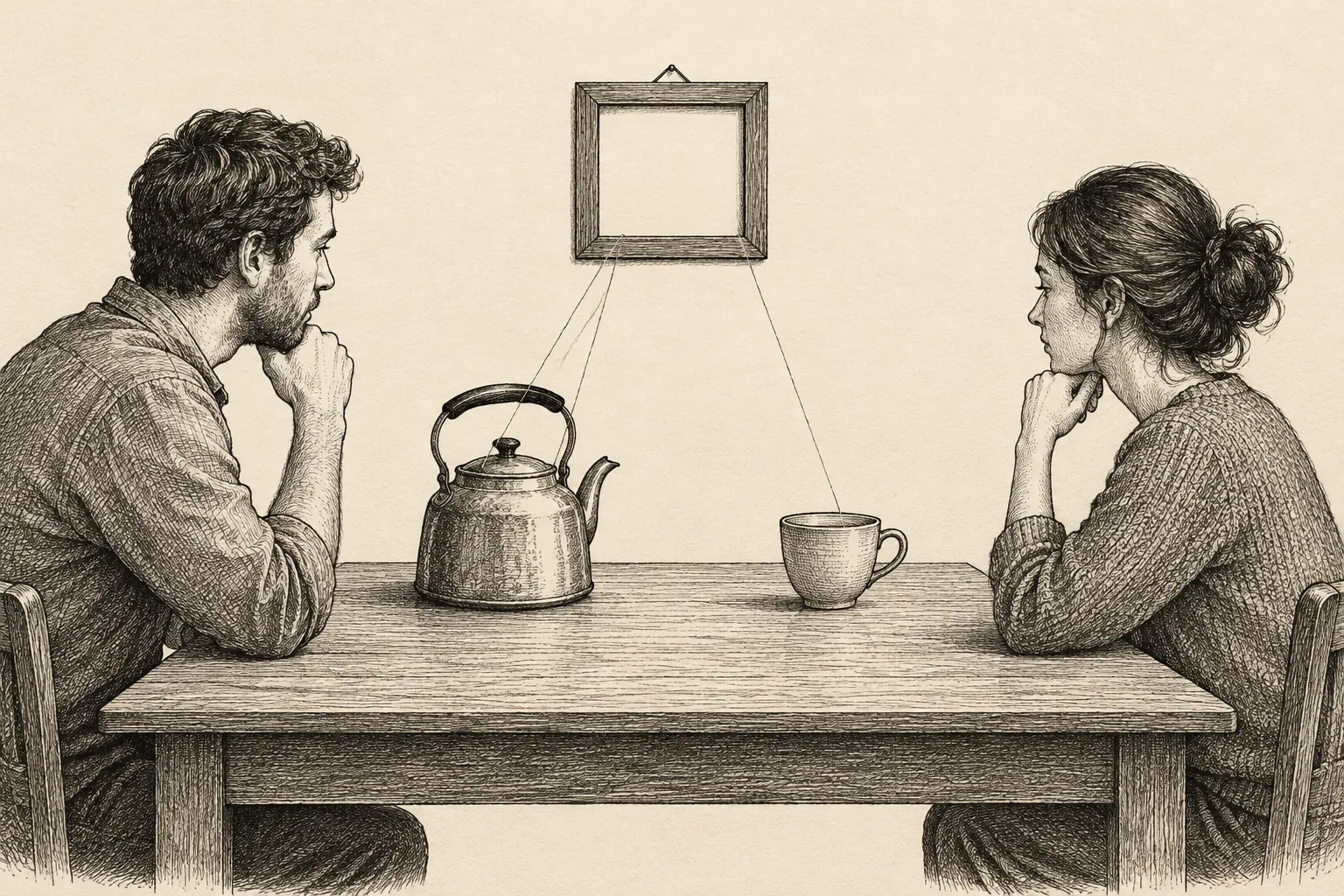
The authors ask whether models keep an internal sense of where objects are. Imagine asking whether an apple sits left of a cup. They found three directions inside model activity that track left–right, above–below, and close–far positions. They call this pattern S-Space and read positions from it before the model gives its answer.
Hypothetical illustration: an apple appears left of a cup in a photograph. A model might record both positions but choose the wrong answer when asked about a view from the other side. This example explains the distinction; it is not a reported test case.
The authors use selected image questions, not a deployment test. Their SpinBench method supplies the viewpoint rotation, which calculates positions for a new view. Its score therefore does not show that Molmo2-ER makes that calculation on its own. For EmbSpatial, they evaluate a selected subset. Their controlled reasoning study also uses a manually written sequence containing relations provided by the benchmark. They identify axes and choose layers on separate sets of COCO training images. They also use held-out COCO pairs for a position analysis. Depth comparisons rely on estimated depth, not direct physical measurements. PtoP note: This source is an arXiv preprint, a publicly shared research paper. It is not evidence of peer review, a check by other researchers.
On SpinBench questions without a supplied starting relation, the authors report 60.96% accuracy for Molmo2-ER’s direct answers. They report 94.52% for a spatial readout from S-Space followed by an explicit viewpoint rotation. Accuracy means the share of questions answered correctly. Molmo2-ER is an image-and-language model, which answers questions about images. The higher figure belongs to the added readout-and-rotation method, not its direct answers. The authors also report that editing Molmo2-ER’s S-Space changed spatial judgments while largely preserving color judgments.
The authors’ tests separate noticing object positions from reasoning about a changed viewpoint. That distinction could help developers investigate errors. They would not have to treat every wrong answer as a failure to see the scene.
The authors propose using internal positions to locate where spatial reasoning goes wrong. They also suggest that future systems could pair visual models with separate tools for spatial transformations. These are calculations that change how positions are represented. These proposals are directions for future work, not tested deployments.
FROM PAPER TO PRACTICE
The paper links to the verified repository at https://github.com/mirros-lab/s-space. Its README uses a Manchery address in the clone command. The following is an unverified reader procedure, not a reproduction performed here; the README specifies a CUDA host and the uv tool, and installation downloads models and data. Access requirements and any costs are not stated.
An n8n workflow would not be useful here: the study inspects internal model activity and runs local experiments, rather than testing an automated service workflow.
Was this explanation easy to understand?
ENGLISH EDITION / PAPER 02 · NEW / EDITOR PICKS
Why it matters to youA tool can work on familiar examples yet fail when a new request arrives. This preprint offers a way to examine that gap before relying on an agent-built tool.
The study asks whether coding agents build tools that meet a request beyond the examples they practice on. A coding agent is software that reads instructions and writes code. The authors gave these builders commissions to create, change, or improve other agents. They then froze each delivery and tested what it did on cases the builder had not seen.
Hypothetical example: a team requests a tool that translates scientific papers while keeping figures in place. It might translate the practice papers but mishandle a page layout it has not seen. That would show why testing the finished tool matters more than checking its sample output.
The authors built each builder–task pairing once in the main comparison and harness studies. Creation and Editing Result scores use a model judge, a model that grades results. Its errors can affect those scores. Optimization instead uses each source benchmark's evaluator, which is its scoring system. Absolute scores can be compared within a task family, but not across families. The authors also note that some studies use different runtime models and judges. A runtime model is the model the delivered agent uses when it runs. Those studies should therefore be compared only within themselves.
In the main Creation comparison, 50 runs averaged 11.2 Result points on a 0–100 scale. Result scores the delivered agent's behavior on held-out cases, which are examples saved for final testing. Validity gates, or pass-or-fail checks, can also affect that score. Eleven Creation runs ended development with scores of 90 or above. Yet those runs averaged 9.9 on held-out Result. These are the authors' findings for those runs, not scores for every AgentSWE variant.
The authors found that good practice scores often did not carry over to unseen cases. They also found deliveries that failed to run. Some claimed work that their own records did not support. For someone commissioning a tool, the paper draws attention to what the delivered tool actually does.
A team could use this approach to decide how to test a custom agent before using it. This is a possible use of the benchmark, a set of tests, not a deployment the authors measured.
FROM PAPER TO PRACTICE
The official repository documents a small smoke run; this procedure has not been tested here. It needs Linux x86-64, Docker, Python 3.10 or newer, and a DeepSeek key. Model calls require key access and may incur provider costs.
An n8n workflow is not needed for the documented local benchmark run. The repository's command-line checks are the relevant starting point.
Was this explanation easy to understand?
ENGLISH EDITION / PAPER 03 · TOP VOTED · 6 MONTHS
Why it matters to youChoosing the better of two edited images can take more than checking whether an object changed. This preprint explores whether a small set of human choices can guide that judgment.
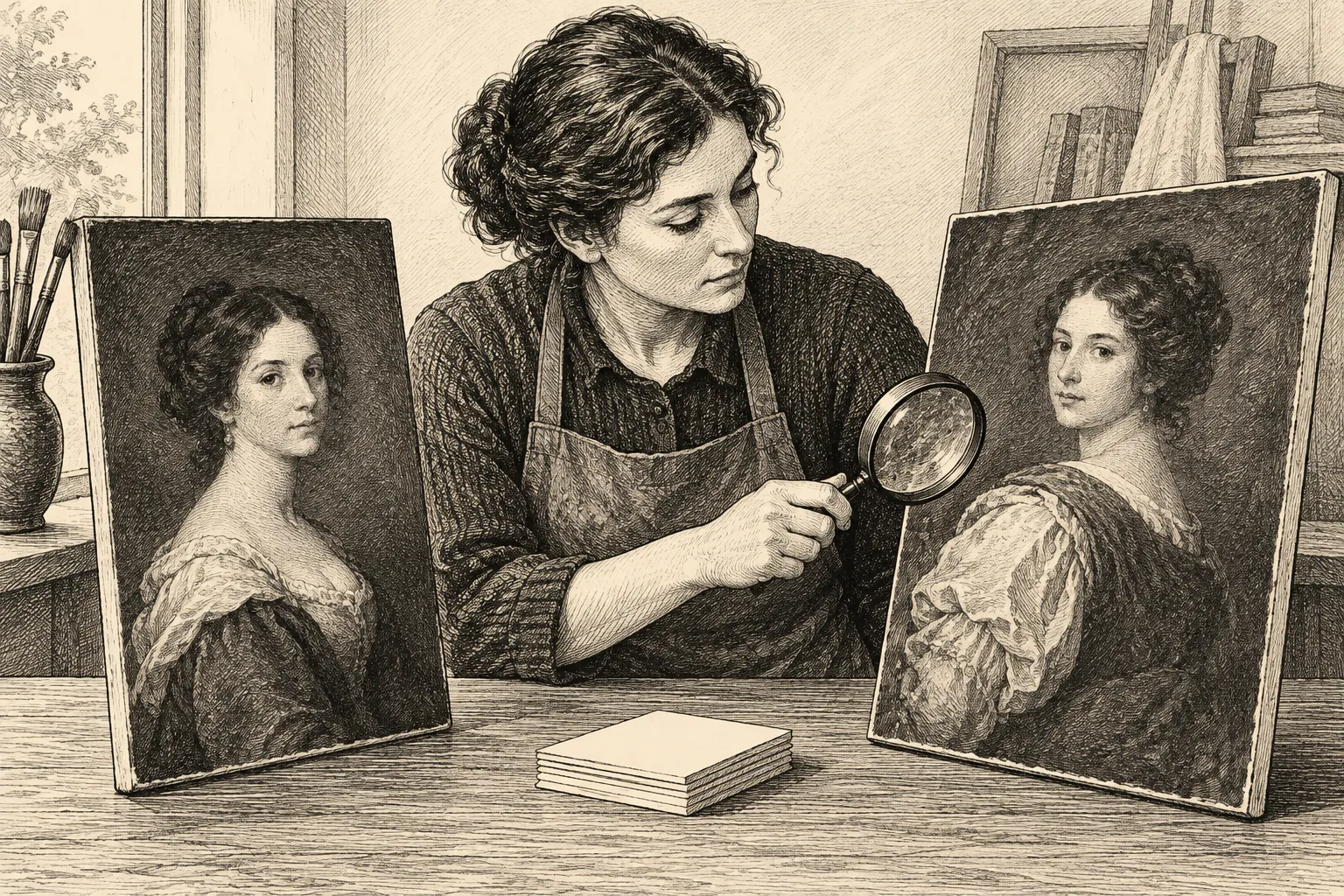
The study asks whether an image judge can learn what people prefer without retraining its underlying model. Picture checking whether an edit changes a coat’s color but leaves its buttons intact. RewardHarness builds a library of written judging rules and checking steps from human examples. A coordinator chooses relevant entries, and an image-reading model uses them to rank possible edits.
Hypothetically, a shop asks for a red coat in a product photo to become blue. One candidate changes the coat but distorts its buttons; another keeps them intact. A judge using the written guides could check both the requested color and the preserved details. This example illustrates the method, not a reported test.
The authors used examples sampled from the EditReward training set. They checked library changes against a small held-out set, meaning examples kept aside for checking. They warn that a narrow or biased set may make the library over-specialize. That means its rules may work well on those examples but less well elsewhere. The coordinator depends on access to the proprietary Claude model, which carries a cost. Open-source alternatives remain untested. They tested only how well instruction-guided image edits were judged. The source is a preprint, a paper shared before formal peer review.
On EditReward-Bench and GenAI-Bench, RewardHarness ranked possible edits using a Gemini-2.0-Flash Sub-Agent. It reached 47.4 average accuracy. Here, accuracy measures how closely its rankings match human preference rankings. The authors report that result as 5.3 points above GPT-5. In a separate ImgEdit-Bench test, RewardHarness served as the training reward for the FLUX.2-klein-base-4B editor. The editor’s overall score rose from 3.32 to 3.52. That editing score measures the trained editor, not the Gemini-based judge’s ranking accuracy.
The authors investigate whether written rules can capture judging criteria without retraining the judge. That could matter where collecting many human comparisons is difficult. Their tests concern image editing guided by instructions, not other visual tasks.
A possible use is comparing possible image edits before a person chooses one. The paper also tests RewardHarness as a reward signal, a score used to guide further image-editor training. It does not report a workplace deployment.
FROM PAPER TO PRACTICE
This is a conceptual exercise; installation is unverified because the supplied paper gives no verified code procedure. Prerequisites: two versions of an image, its original, and the edit request. No model access or payment is needed for this exercise; using the paper’s proprietary coordinator would require access and may cost money.
A proposed n8n integration could route an original image, an edit request, and candidate edits to a human review step. The paper does not test n8n or provide a verified procedure for connecting it to RewardHarness.
Was this explanation easy to understand?
COMPARISON
Compare topics, possible uses and limits. Each result remains attributed to its own paper.
| Paper | Central idea | Possible use | Limit |
|---|---|---|---|
| Reading a model’s spatial clues may help explain wrong answers | The authors ask whether models keep an internal sense of where objects are. Imagine asking whether an apple sits left of a cup. They found three directions inside model… | The authors propose using internal positions to locate where spatial reasoning goes wrong. They also suggest that future systems could pair… | The authors use selected image questions, not a deployment test. Their SpinBench method supplies the viewpoint rotation, which calculates… |
| Test whether a coding agent delivers the tool you requested | The study asks whether coding agents build tools that meet a request beyond the examples they practice on. A coding agent is software that reads instructions and writes… | A team could use this approach to decide how to test a custom agent before using it. This is a possible use of the benchmark, a set of… | The authors built each builder–task pairing once in the main comparison and harness studies. Creation and Editing Result scores use a model… |
| A Small Set of Examples Could Guide Image-Edit Judging | The study asks whether an image judge can learn what people prefer without retraining its underlying model. Picture checking whether an edit changes a coat’s color but… | A possible use is comparing possible image edits before a person chooses one. The paper also tests RewardHarness as a reward signal, a… | The authors used examples sampled from the EditReward training set. They checked library changes against a small held-out set, meaning… |
ARCHIVE
The last two issues. Every earlier edition is in the archive.
12