Changing rules make AI assistants harder to rely on
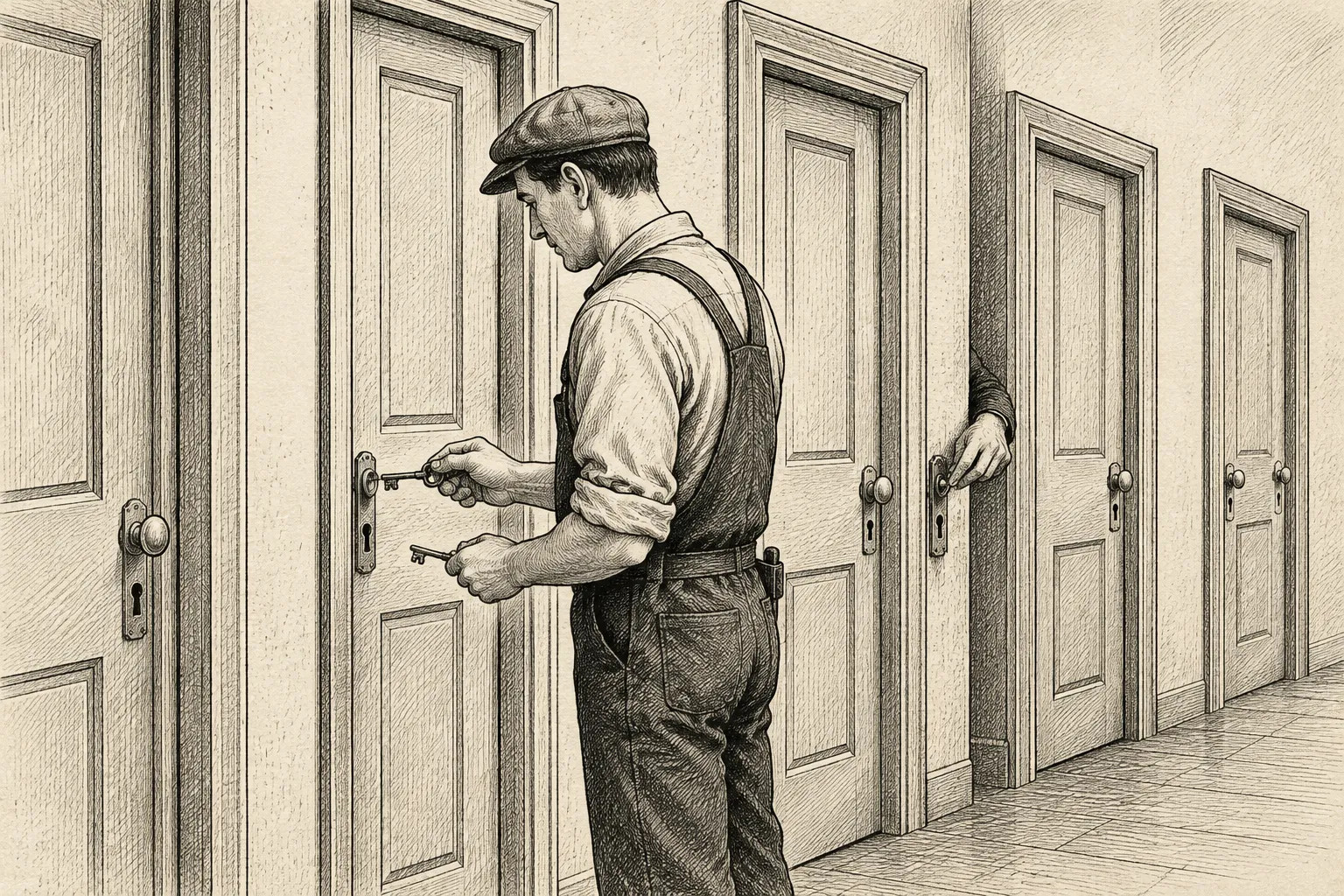
The study asks whether AI assistants can discover hidden rules and notice when they change. AI assistants are computer programs that…
ISSUE 21/2026 · 20-10-2026
The study asks whether AI assistants can discover hidden rules and notice when they change. AI assistants are computer programs that help with tasks. Hidden rules are rules the assistants cannot see directly. Imagine testing several factory choices to learn which…
3 paper · Original sources linked in every story
5 MINUTES ON PtoP
A software helper can take work off your hands, but who notices when the work itself changes? TechCrunch reports that Replit’s boss imagines a “self-driving company” where software handles routine work and people still steer. A research paper on changing hidden rules gives that idea a useful edge: its authors tested assistants on made-up tasks where a rule shifted without warning. The question was not just whether an assistant could act, but whether it would discover that an old assumption no longer fit. See: Replit's CEO says the future of work is the 'self-driving… · Changing rules make AI assistants harder to rely on
In the authors’ default test, assistants chose their own probes—small tests of the task—and Gemini-3.8-Flash had the highest calibrated accuracy among eight models, at 67.25%. That measure gives partial credit for nearly best actions, rather than counting only exactly correct choices. In a separate setting where past cases stayed visible, the seven models with diagnostic runs gained a mean 10.30 percentage points; Gemini-3.8-Flash was not in that comparison. The contrast points to two different jobs: finding clues and making use of clues already at hand. See: Changing rules make AI assistants harder to rely on
That distinction matters beyond office tasks. GOV.UK reports that the UK medicines regulator plans to check smart medical tools throughout their time in use, including tools that change after hospitals start using them. These are plans and tests, not evidence yet of safer or faster care. Still, the regulator’s focus and the hidden-rule study raise a shared question: if an AI tool changes, or the conditions around it do, how might people learn that its earlier checks need revisiting? See: UK regulator brings new AI and MedTech agenda to AdvaMed · Changing rules make AI assistants harder to rely on
Another paper approaches a narrower task: its authors tested an image-question model that selects spatial answers directly instead of writing them out. Across twelve benchmarks, they report a combined overall score of 65.64% and an average response time of 160.6 milliseconds per question on one NVIDIA B200 graphics processor. Those figures describe the stated tests and setup. As a PtoP note, benchmark results are not evidence of workplace use; a quick answer is a different thing from knowing when its conditions have changed. See: Spatial image questions may not need written answers · Changing rules make AI assistants harder to rely on
There is something reassuringly ordinary about the role left for people in TechCrunch’s account of Replit’s vision: steering. The hidden-rule study suggests one reason that role could matter even when a helper seems capable: someone may need to notice a changed rule and supply fresh evidence. If you use an AI helper this week, could you pick one recurring task and ask yourself what change would make its usual answer worth checking again? See: Replit's CEO says the future of work is the 'self-driving… · Changing rules make AI assistants harder to rely on
Just here for the stories? They are below, by topic.
PtoP · NEWSLETTER
Six papers and the news, explained in plain English, each morning after the editor approves the issue. Free, and you can unsubscribe at any time.
News and analysis from the sources, separate from the papers. Headlines and dates link to the originals.
THIS ISSUE AT A GLANCE
↗02 / NEW / EDITOR PICKSSmall model updates help predict brain signals during filmsThe study asks whether small changes to a large model improve predictions of brain activity during…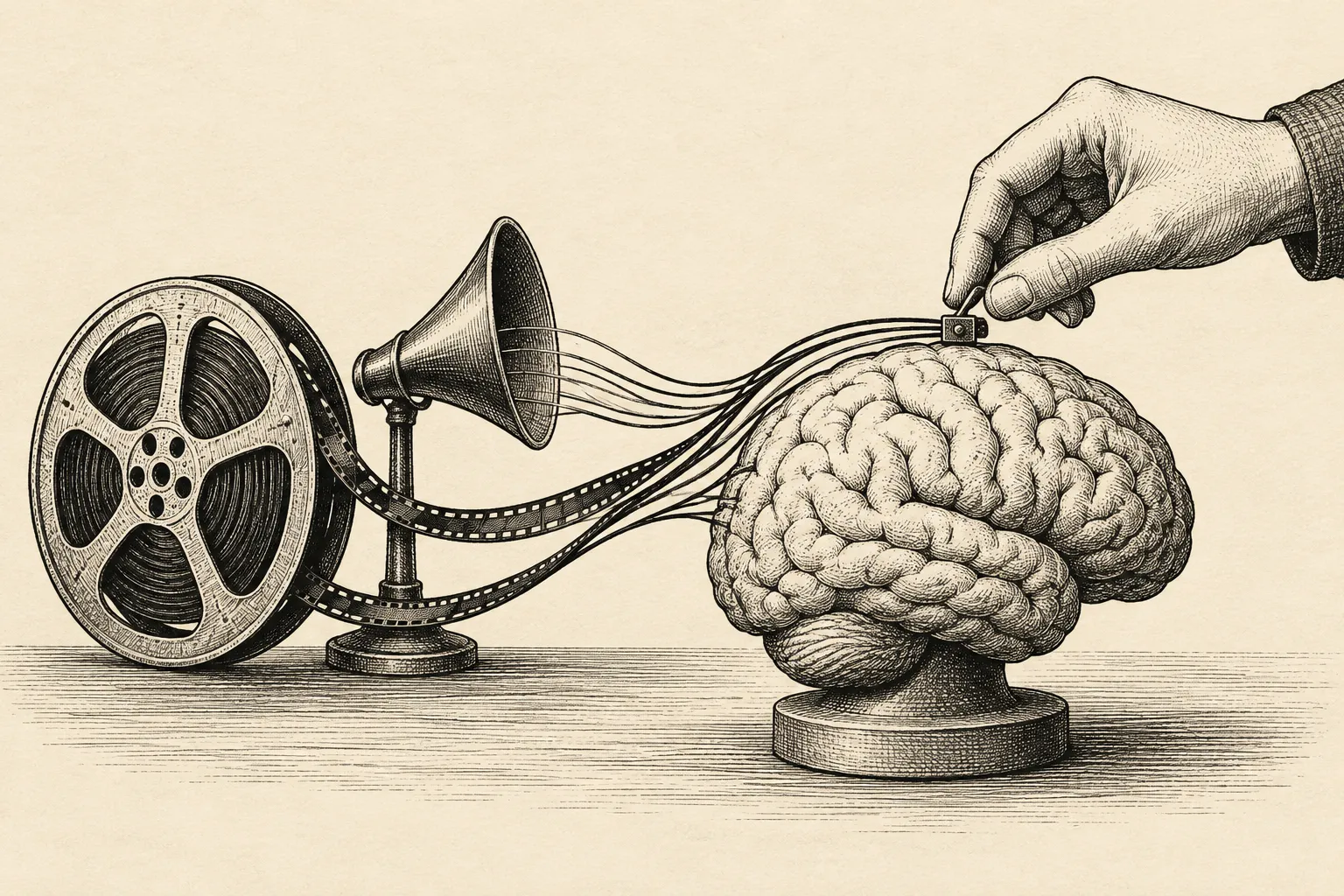 ↗03 / TOP VOTED · 6 MONTHSSpatial image questions may not need written answersThe study asks whether a model answering questions about images can choose spatial answers without…
 ↗
PODCAST / ENGLISH EDITION
The front-page episode covers the papers and news; each paper also has its own short conversation.
Both voices are AI-generated with OpenAI. This is a scripted editorial conversation, not a recording of the authors.
The study asks whether AI assistants can discover hidden rules and notice when they change. AI assistants are computer programs that…
The study asks whether small changes to a large model improve predictions of brain activity during films. The authors fed film images…
The study asks whether a model answering questions about images can choose spatial answers without writing them out. Spatial answers…
FROM THE NEWS DESK
Editorial explanations of the sources: examples and possible uses are distinguished from what the source establishes.
People and society GOV.UK · 19-10-2026 · government or regulator
The UK medicines regulator announced plans to change how it checks smart medical tools. Imagine a scan-reading program that changes after hospitals start using it. The agency wants to check such tools throughout their lifecycle, meaning their time in use. It says this could help protect patients while allowing useful tools to reach them faster.
Imagine a program that flags a worrying spot on a scan for a doctor. If its software changes later, the agency could ask for evidence that it remains safe.
These are plans and tests, not proof that the proposed rules will make care safer or faster.
The agency wants safety checks that keep pace when medical software changes.
The UK Medicines and Healthcare products Regulatory Agency oversees medicines and medical devices, including health software. Its 2030 plan calls for updated rules. The government accepted all 44 recommendations from a doctor-led commission. The agency says it is testing new checks through AI Airlock, a supervised testing program. AI means software that performs tasks usually needing human judgment. The agency wants closer work with the US regulator, but each would make its own decisions. The release does not say when new rules will start. It also does not say whether they will improve care.
The agency could study changing scan software in a regulatory sandbox, a supervised space for testing new approaches.
Was this explanation easy to understand?
Tools and building Hugging Face Blog · 19-10-2026 · company announcement
Hugging Face says its new tool makes running AI models on Amazon's Trainium chips simpler. AI models are programs trained on examples to produce text, images, or other results. Trainium is a chip Amazon Web Services designed for training AI models at scale. TorchNeuron connects Trainium to PyTorch, software developers use to build and run AI models. Hugging Face says an early public beta, or public test release, is planned for Oct. 20, 2026.
Imagine moving a picture-making project to a different computer without rewriting its instructions. Hugging Face says TorchNeuron could let developers make a similar move to Trainium.
Using static shapes means keeping input sizes fixed; Hugging Face recommends them to avoid repeated preparation. The company reports that some loading features still do not work with Trainium.
TorchNeuron aims to remove special setup between familiar AI tools and Amazon's chips. Its broader support claims come from Hugging Face's own announcement, not an independent study.
Before TorchNeuron, Hugging Face users needed Optimum Neuron, an extra tool for these chips. That tool hid complicated chip rules but required special model code and training tools. Hugging Face credits Amazon's team for working on the new connection and responding to feedback. Developers want to train models and produce results using their familiar Hugging Face tools. The post does not say whether independent testers have checked its wider support claims.
A developer could train a model on Trainium, then share the saved model for use on other hardware. Hugging Face says the saved model does not depend on Trainium.
Was this explanation easy to understand?
AI agents TechCrunch · 16-10-2026 · news report
TechCrunch reports that Replit’s boss envisions software helpers doing routine work while people make decisions. He calls this a “self-driving company,” but says people must still steer the work.
Imagine a customer reports a broken button. A helper gathers clues before a person chooses a fix. Masad says Replit uses AI agents, software that carries out tasks, to inspect support tickets, or customer help requests. A worker can then ask another agent to prepare a patch, a small software fix.
TechCrunch describes Masad’s account, not an independent test of workplace benefits or effects on jobs.
His idea is shared work between people and software, not a company that runs without people.
TechCrunch reports that Replit makes tools that help businesses build software. At a TechCrunch event, its chief executive, Amjad Masad, described changes inside Replit. He said software helpers now begin some routine tasks for its workers. He expects people to spend more time choosing goals and judging results. The report does not establish whether other workplaces would see the same changes.
A support team could use helpers to gather clues while leaving repair decisions to people.
Was this explanation easy to understand?
ENGLISH EDITION / PAPER 01 · NEW / EDITOR PICKS
Why it matters to youWork rules can change before anyone announces them. This study suggests that an AI assistant may need help finding clues that its old rule no longer fits.
The study asks whether AI assistants can discover hidden rules and notice when they change. AI assistants are computer programs that help with tasks. Hidden rules are rules the assistants cannot see directly. Imagine testing several factory choices to learn which conditions favor each one. The authors built AdaExploreBench, a set of made-up tasks where assistants can test choices before acting. Partway through a task, a hidden rule changes without warning. The authors then check the assistants’ choices and whether they identify what changed.
Hypothetical illustration, not a study result: A factory assistant tests whether a late order calls for overtime. Later, staffing changes alter which choice works best. Testing the same kind of order again might show that the earlier rule no longer works.
The authors say their hidden-rule tasks simplify real environments. They tested changes within the same rule family, or type of rule. They did not test changes between families or a systematic range of change sizes. Their probe counts measure testing effort, not test quality directly. The plausibility review checked a sample of generated tasks, not every task. This source is an arXiv preprint, a research paper posted online before formal publication. As a general PtoP note, a benchmark result is not a workplace deployment.
In the authors’ default setting, rules changed without warning, and assistants chose their own probes. Probes are tests the assistants choose to run. Gemini-3.8-Flash scored 67.25% calibrated accuracy, the highest score among the eight tested models. Calibrated accuracy gives partial credit for nearly best actions; it is not the share of exactly correct choices. In the separate Evidence Given setting, past cases remained visible to the assistants. The authors report a mean gain of 10.30 percentage points for the seven models with diagnostic runs. Diagnostic runs are separate test runs used for this comparison. Gemini-3.8-Flash had no diagnostic runs and is not part of that comparison.
The authors found that giving assistants more evidence often helped them make better choices. Making them run more tests did not, on average, produce the same improvement. That distinction points researchers toward how assistants choose and use tests, rather than test counts alone.
The benchmark could help researchers study when an assistant should test its assumptions again. It does not show that an assistant can safely manage changing rules in a real workplace.
FROM PAPER TO PRACTICE
A safe paper-and-pencil exercise follows. Installation and access to the paper’s code are unverified here; this exercise needs only paper and a pencil, with no stated cost.
An n8n workflow, meaning a chain of connected software steps, is not appropriate here. The source does not provide a verified integration or deployment procedure.
Was this explanation easy to understand?
ENGLISH EDITION / PAPER 02 · NEW / EDITOR PICKS
Why it matters to youFilm images, sound, and speech may help researchers predict brain signals, or recorded brain activity. This study explores improving those predictions without retraining an entire large model.
The study asks whether small changes to a large model improve predictions of brain activity during films. The authors fed film images, sound, and written speech transcripts into the model. They trained small add-on parts using brain signals recorded while people watched. The model then predicted signals for films excluded from both training and model selection.
Hypothetically, a researcher could provide a scene's images, soundtrack, and spoken words. BrainLoRA would use those inputs to predict signals recorded from someone watching the scene. This illustrates the task; it is not a new test result.
The authors trained their main models on one benchmark with four subjects watching audiovisual stories. A benchmark is a shared test used to compare models; audiovisual stories include images and sound. Their tests on another subject and another dataset still involved narrative film. They say the experiments do not constitute a general-purpose brain foundation model. Such a model would be meant for a broad range of brain-related tasks. As a general PtoP note, this arXiv source is a preprint, a paper shared before formal review. Benchmark scores are not a tested deployment, or a service put into use.
On the Algonauts 2025 held-out Friends season 7 test, the authors report a score of 0.327. They used BrainLoRA with a cross-attention readout, which selects information from the model's output to predict brain signals. On the held-out movie test, they report 0.228. The scores measure how closely predicted and recorded signals vary together across brain regions and subjects. The authors report that LoRA improved results for all nine multimodal backbones they tested. These models process multiple input types; each frozen backbone was a version they had not adapted using brain signals.
Recorded brain signals are limited, while models that process film inputs can be very large. The authors report better predictions when they train a small adapter alongside a readout. That distinction may help researchers choose what to train for similar film-viewing studies.
One possible use is studying which film parts help predict activity in different brain regions. The authors also tested whether an adapter trained on their main dataset helped on another film-viewing dataset. A dataset is a collection of recordings used in research. Neither use is a tested everyday or clinical service.
FROM PAPER TO PRACTICE
The official repository gives a procedure, but this article has not verified an installation. You need Algonauts 2025 data access, substantial storage, and the listed software and graphics-card setup; no price is stated.
n8n is a tool for linking app tasks, but a proposed integration is not useful here. The paper tests large local model runs, not an app workflow.
Was this explanation easy to understand?
ENGLISH EDITION / PAPER 03 · TOP VOTED · 6 MONTHS
Why it matters to youA tool checking images may only need to choose a side, estimate a distance, or mark a spot. The authors test whether choosing directly can save time without lowering overall benchmark performance. A benchmark is a set of tests used to compare models.
The study asks whether a model answering questions about images can choose spatial answers without writing them out. Spatial answers describe things like an object's position. For a position question, the model compares possible answers and selects one. The authors use the same choice process for distance ranges and image regions. For finer answers, the model narrows a range or looks again at a selected crop, or part, of the image.
Hypothetically, a warehouse worker could ask which side of a box holds a handle. Given left and right as choices, the model would select one without composing a sentence. This illustrates the method, not a warehouse test reported by the authors.
The authors say their checks for duplicate images cannot establish that training and test scenes are independent. Some supporting studies used a smaller training set, not the final model. Their short training-speed runs did not test answer quality. One pilot used a validation set, used to check a model, rather than a test set. A length result used an internal development set. This source is a preprint, a paper shared before formal peer review. As a general PtoP note, a benchmark, or set of comparison tests, is not a deployment, or real-world use.
Across twelve spatial benchmarks, the authors report an overall score of 65.64% for the final MJev-Spatial model. A benchmark is a set of tests used to compare models. That score combines the benchmarks' reported measures; it is not a single question-answer success rate. On one NVIDIA B200 graphics processor, its average response time for one question was 160.6 milliseconds across those benchmarks.
Writing an answer and then reading it back adds work when the allowed answers are already known. The authors report results suggesting direct selection is useful for the spatial tasks they tested. That does not establish how it would perform in an everyday workplace.
The method could inform tools that answer tightly defined questions about images. Its measured results concern the reported research tests, not workplace use.
FROM PAPER TO PRACTICE
The official repository provides example requests, code, and a model link; this procedure is not described here as tested.
An n8n workflow is not needed to understand this result. The paper tests a model and its decision method, not an n8n integration.
Was this explanation easy to understand?
COMPARISON
Compare topics, possible uses and limits. Each result remains attributed to its own paper.
| Paper | Central idea | Possible use | Limit |
|---|---|---|---|
| Changing rules make AI assistants harder to rely on | The study asks whether AI assistants can discover hidden rules and notice when they change. AI assistants are computer programs that help with tasks. Hidden rules are… | The benchmark could help researchers study when an assistant should test its assumptions again. It does not show that an assistant can… | The authors say their hidden-rule tasks simplify real environments. They tested changes within the same rule family, or type of rule. They… |
| Small model updates help predict brain signals during films | The study asks whether small changes to a large model improve predictions of brain activity during films. The authors fed film images, sound, and written speech… | One possible use is studying which film parts help predict activity in different brain regions. The authors also tested whether an adapter… | The authors trained their main models on one benchmark with four subjects watching audiovisual stories. A benchmark is a shared test used… |
| Spatial image questions may not need written answers | The study asks whether a model answering questions about images can choose spatial answers without writing them out. Spatial answers describe things like an object's… | The method could inform tools that answer tightly defined questions about images. Its measured results concern the reported research tests… | The authors say their checks for duplicate images cannot establish that training and test scenes are independent. Some supporting studies… |
ARCHIVE
The last two issues. Every earlier edition is in the archive.
19