Training Can Put Feedback Where a Model Needs It
The study asks whether training can link each piece of feedback to the words it concerns. For example, a database answer might use the…
ISSUE 19/2026 · 16-10-2026
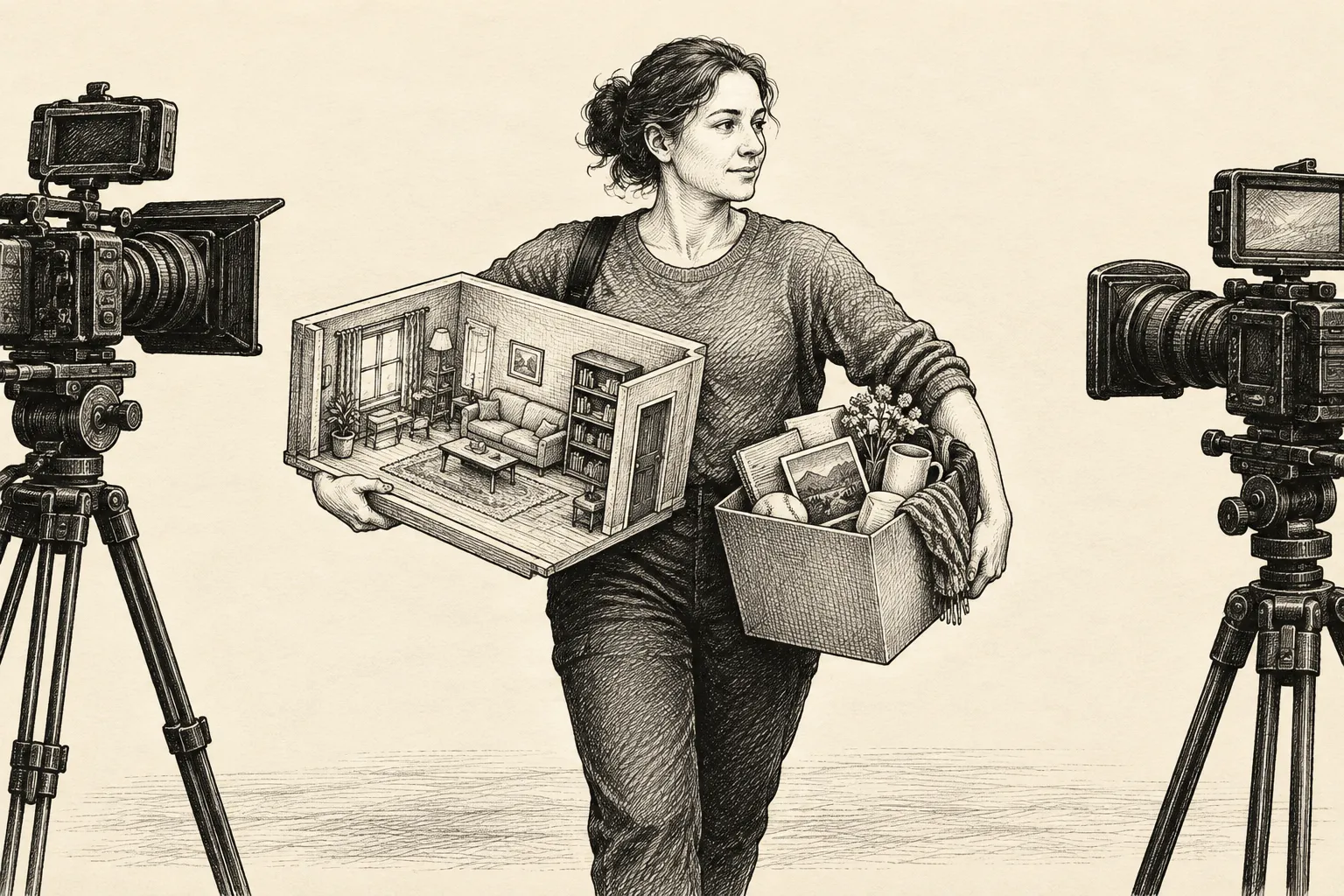
The study asks how generated videos can return to earlier places or moments without losing track of them. Imagine filming a room, leaving it, then returning from another angle. The authors’ system, ATAS, keeps one memory of the room’s layout and another of events over…
3 paper · Original sources linked in every story
5 MINUTES ON PtoP
A thread runs through several of today’s items: an AI system may need the right information at the right moment, not simply more information overall. One research team asks which words in an answer deserve particular training feedback. Another trains specialist assistants to decide who should take the next turn. A third gives a video system separate memories of places and events. Each is working on a different task, but each makes context more specific. See: Training Can Put Feedback Where a Model Needs It · Specialist AI Teams Can Learn Who Should Act Next · Keep Rooms and Events Steady Across Generated Video Shots
Consider a database assistant that writes a query in the right form but names the wrong column. The authors of MRTPO test a way to direct training credit or correction toward words associated with each rule, rather than spreading a score evenly across the answer. Across six database benchmarks, they report 73.15 ±0.19% average execution accuracy with Qwen2.5-Coder-7B-Instruct, compared with 71.55 ±0.27% for GDPO using the same model. These are research tests, not reports of workplace performance; the authors also say their approach needs checking information that can be expressed as text and change the model’s predictions. See: Training Can Put Feedback Where a Model Needs It
For a team of assistants, the important context might be whose turn it is. The MPT researchers trained specialists to bid to act, then used task results to train both their actions and their bids. On 32 held-out Minecraft world seeds, they report an average task score of 41.5, compared with 20.3 for a single-agent baseline. Those scores count progress through specified crafting events, not only completion. The authors have not tested workplace teams, and say their method of replaying a turn leaves an open question for interactions that cannot be undone. See: Specialist AI Teams Can Learn Who Should Act Next
Sometimes the missing context is a place or a language. The ATAS researchers store a video scene’s layout separately from its events, so a later shot can draw on both. They report higher average video test scores than ReCA using the same generator, alongside more total processing time. In a different kind of preparation, NVIDIA and AI4Bharat say they plan to release text and generation tools spanning 22 Indian languages. They caution that translated text cannot replace writing originally created in those languages, and that software checks may leave errors. See: Keep Rooms and Events Steady Across Generated Video Shots · Scaling Indic Pretraining: 2.8 Trillion Tokens and an Open…
The same question—what information is available to whom—also applies to checking AI work. Anthropic says six outside METR reviewers now have access to its internal safety work, while Anthropic can require sensitive details to be removed from their reports. METR can publicly question those removals; findings from the arrangement have not yet been reported. For everyday use, the smaller version is within reach: this week, could you give an AI assistant one specific check for its answer and see whether it applies that check where it matters? See: An update on independent evaluators
Just here for the stories? They are below, by topic.
PtoP · NEWSLETTER
Six papers and the news, explained in plain English, each morning after the editor approves the issue. Free, and you can unsubscribe at any time.
News and analysis from the sources, separate from the papers. Headlines and dates link to the originals.
THIS ISSUE AT A GLANCE
 ↗02 / NEW / EDITOR PICKSSpecialist AI Teams Can Learn Who Should Act NextThe study asks whether a team can learn both what to do and who should act next. Imagine a wood gatherer…
 ↗03 / TOP VOTED · 6 MONTHSKeep Rooms and Events Steady Across Generated Video ShotsThe study asks how generated videos can return to earlier places or moments without losing track of…↗
PODCAST / ENGLISH EDITION
The front-page episode covers the papers and news; each paper also has its own short conversation.
Both voices are AI-generated with OpenAI. This is a scripted editorial conversation, not a recording of the authors.
The study asks whether training can link each piece of feedback to the words it concerns. For example, a database answer might use the…
The study asks whether a team can learn both what to do and who should act next. Imagine a wood gatherer waiting while a craftsperson…
The study asks how generated videos can return to earlier places or moments without losing track of them. Imagine filming a room…
FROM THE NEWS DESK
Editorial explanations of the sources: examples and possible uses are distinguished from what the source establishes.
Tools and building Hugging Face Blog · 16-10-2026 · company announcement
NVIDIA and AI4Bharat say they plan to release a large collection of Indian-language text. They also plan to release the tools used to make it. Imagine an English math lesson translated into Hindi, with its equations kept intact. The collection contains about 2.8 trillion tokens, or pieces of text counted by software, across 22 Indian languages.
A team could turn an English question-and-answer page into Tamil for AI training. The team would check that the Tamil answer still matches the English source.
The authors warn that translated text cannot replace writing originally created in Indian languages. Checks were mostly done by software, so errors may remain. Their reported model gains came after training with both translated and naturally written text.
This planned release could give builders more Indian-language material. They still need local writing and careful checks.
The authors say AI tools have less training data in Indian languages than in English. Training data is text an AI system learns from. NVIDIA worked with AI4Bharat, a language research lab at IIT Madras. They translated English material and checked whether the new text kept its meaning. The release is described as coming soon; the page does not give a date. The authors say it remains unclear how much the translated text alone helped the model they tested.
A developer could use the collection to help an AI assistant answer school questions in Indian languages. They could also adapt the planned tools to translate their own source material.
Was this explanation easy to understand?
People and society Anthropic · 15-10-2026 · company announcement
Anthropic says six outside reviewers from METR now have access to its internal safety work. METR is a group that does not aim to make money. It checks powerful artificial intelligence (AI) systems and plans to publish what it finds. Anthropic says this access lets outsiders check risks without making sensitive information public.
Imagine a restaurant letting an outside inspector check its kitchen without copying customer records. The inspector could report safety problems while keeping private details hidden. This is an example, not a description of METR's work.
Anthropic says it can require redaction, meaning removal of certain sensitive details, from METR's reports. METR can publicly question those removals, but the page gives no findings from this arrangement yet.
Outside reviewers may offer a closer check of Anthropic's safety work, but their findings are still to come.
Anthropic says more powerful AI systems need tougher checks and stronger safeguards, or safety measures. Last month, it promised more outside checks and signed a White House agreement about them. Anthropic says it cannot openly share some information, including customer and training details. It also works with SecureBio and Accenture, but those partnerships currently give reviewers less access. The page does not say when METR will publish its findings.
A policymaker could read METR's future risk assessments, or checks for possible harms, when reviewing Anthropic's safety claims.
Was this explanation easy to understand?
Tools and building Google · 14-10-2026 · updated 15-10-2026 · company announcement
Google says it is publicly launching Deep Review, a tool that analyzes technical documents. Google also highlights health research, including a clinic study and a flu prediction result.
A researcher might use Deep Review to examine a paper before deciding what needs closer human attention. That is an illustration, not a workflow Google demonstrates on this page.
Google says a peer-reviewed study evaluated AMIE in a real clinic. Peer-reviewed means other researchers checked the study before publication. Google also cites a flu forecast, or prediction, ranked best by the Centers for Disease Control. Neither report establishes results for every project in this announcement.
The concrete news is Deep Review’s public launch, alongside Google’s account of several health projects. Their evidence and readiness differ, so one result should not stand in for all of them.
Imagine researchers facing a pile of detailed papers before a conference. Google says Deep Review has been used on 15,000+ submissions across four research conferences. Google presents it alongside projects meant to help health experts. Google cites a clinic study of AMIE, its medical AI system. AI means computer systems trained to work with information. The page gives no detailed Deep Review results and does not say who can access it.
Google suggests its research tools could help experts work through complex documents and public health information. The page says Google is launching Deep Review publicly, but gives no access instructions.
Was this explanation easy to understand?
ENGLISH EDITION / PAPER 01 · NEW / EDITOR PICKS
Why it matters to youA writing or coding assistant may need to meet several rules at once. This study explores a way to make its training feedback more specific.
The study asks whether training can link each piece of feedback to the words it concerns. For example, a database answer might use the right form but name the wrong column. The authors’ method checks which words change when the model sees information about each rule. It then puts more training credit or blame on those words, instead of spreading each score evenly. Training credit means praise that guides learning; blame means correction.
Hypothetical example: An assistant writes a database query with correct formatting but a wrong column name. The method would aim to put format credit near the formatting and error feedback near the query. This example shows the idea; it is not a reported test result.
The authors say each reward needs checking information that can be written as text. A reward is a score used to guide training. That information must also change the model’s predictions. A reward based on response length may not meet that need. Their tests use models from 1.5B to 7B parameters. Parameters are adjustable numbers inside a model. The tests use one shared setting for how feedback is distributed. The authors leave larger models and some other reward types for future study. Tool-call evaluation covers single-turn cases, and instruction training uses only the first two HIR-16K subsets. As a general PtoP note, this arXiv source is a preprint, a paper shared before peer review is confirmed. It does not claim peer review or workplace performance.
The authors report 73.15 ±0.19% average execution accuracy for MRTPO using Qwen2.5-Coder-7B-Instruct across six database benchmarks. GDPO using that same model scored 71.55 ±0.27%. Execution accuracy is the share of questions whose generated query returns the same result as the reference query. These main figures average independent training runs, which are separate training attempts. The extra database allocation-strength test used one seed, a starting value for random choices. That test changed how strongly feedback was placed on relevant words.
A single answer can pass one check and fail another. The authors’ method keeps those checks separate when deciding where training feedback goes. That could matter when builders want an assistant to meet several rules together.
The authors test training for database queries, instruction following, and tool calls. These are research settings, not reports of assistants deployed at work.
FROM PAPER TO PRACTICE
The official repository gives a database-training path, but this is not a tested PtoP procedure. It needs the listed Conda software environment, a local Qwen2.5-Coder-7B-Instruct model, dataset access, and eight H20 GPUs. Access and cost depend on your setup; the README gives no price.
A proposed n8n workflow is not appropriate here: the reported method changes GPU-based model training, not a routine message-handling step.
Was this explanation easy to understand?
ENGLISH EDITION / PAPER 02 · NEW / EDITOR PICKS
Why it matters to youShared work often stalls when the wrong specialist takes the next turn. This study suggests a way to train AI teams to make that choice during simulated tasks.
The study asks whether a team can learn both what to do and who should act next. Imagine a wood gatherer waiting while a craftsperson uses the wood already collected. The authors train specialist AI agents to bid for each turn, with the highest bidder acting. Results from the task then help train both their actions and their future bids.
Hypothetical illustration: A team has collected wood but still needs a crafting table. The craftsperson bids to act, while the miner waits. This explains turn selection; it is not a reported study result.
The authors say training depends on rewards assessed outside the system. Their training has not covered outcomes that are mainly subjective, or based on personal judgment. Their bidding method replays a turn from the same saved state. How to extend that step to real-world interactions that cannot be undone remains an open question. Computing limits prevented tests with several models above 10B parameters each. Parameters are adjustable model values, so 10B means 10 billion values. Those limits also prevented training much larger teams. The held-out OpenResearcher questions were separate from training, but the task used the same document corpus. A corpus is a collection of documents. The authors assessed those answers with a model-based judge, an AI model that checks answers. This is an arXiv preprint, a publicly posted research paper. As a general PtoP note, that status does not establish peer review.
On 32 held-out Minecraft world seeds, the authors report a mean episode reward of 41.5 for MPT. Held-out means not used in training, and world seeds set up the Minecraft worlds. Mean episode reward means the average score for a task run. MPT is the authors’ method for training a team of agents, or software assistants. Their single-agent baseline, a comparison using one agent, scored 20.3. That score counts progress through specified crafting events, not just whether the iron pickaxe was finished. The authors also report higher held-out navigation reward for MPT on 88 simulated route episodes. On 50 held-out OpenResearcher questions, they report 21.0% mean answer accuracy for MPT. The single-agent baseline scored 9.0% on those questions. In separate crafting tests, they compared ways to choose who acts while keeping the same trained action policies. Action policies are the agents’ learned rules for choosing what to do. They also tested trained and initial bid choices and actions in different combinations. A bid expresses how strongly an agent wants to take a turn.
The authors study participation as something agents learn, rather than a fixed schedule. Agents are software assistants working on the task. On their crafting task, each agent’s share of acting turns changed during training. That finding may help researchers study how agents work together alongside each specialist’s skills.
The reported tests cover simulated crafting and navigation, plus questions answered from documents. They did not test workplace teams or physical-robot deployments. One possible use is studying when specialized software assistants should pass work to one another.
FROM PAPER TO PRACTICE
The official repository provides a model download command, but installation and execution are unverified here.
A proposed n8n integration could route a document question between search, page-opening, and text-finding steps. The paper did not test n8n, so this is a workflow illustration, not a demonstrated feature.
Was this explanation easy to understand?
ENGLISH EDITION / PAPER 03 · TOP VOTED · 6 MONTHS
Why it matters to youMaking a video from a story can mean returning to the same room after many shots. This paper explores how a video tool might remember that room and an earlier event.
The study asks how generated videos can return to earlier places or moments without losing track of them. Imagine filming a room, leaving it, then returning from another angle. The authors’ system, ATAS, keeps one memory of the room’s layout and another of events over time. It uses both memories to guide each new shot. Then it checks what that shot can add to memory.
Hypothetical illustration: A story shows someone leaving a mug on a table before going outside. A later shot returns to that room from a new angle. The system would look up the room and the earlier event before making the return shot. This example is not a reported test result.
The authors say their event test has no matching target video. So it cannot check whether each frame agrees exactly. Event memory stores observed moments, not a full model of how people move. The authors report fewer retries with persistent memory, but more total processing time. This is an arXiv preprint, a research paper shared before formal publication. As a general PtoP note, a preprint does not imply peer review.
The authors compared ATAS and ReCA using the same Wan 3.0 video generator. ATAS scored 0.734 on the average of four video test scores. ReCA scored 0.648 in that comparison; higher is better. The authors report that ATAS had the highest average within each of four generator groups. They also report that ATAS had the highest mean human rating on all six rated criteria.
A single good-looking clip does not show whether a whole story stays consistent. The authors test whether their stored room and event evidence helps across separate shots. Their results speak to the tested video tasks, not to everyday film production.
The authors name interactive filmmaking, series production, and planning a film before shooting as possible uses. They do not report a deployed tool in any of those settings.
FROM PAPER TO PRACTICE
The paper links an official code repository. These are its README steps, not a procedure tested here.
An n8n workflow is not a useful first step here: the README calls for a separate graphics service, model files, and video-service credentials.
Was this explanation easy to understand?
COMPARISON
Compare topics, possible uses and limits. Each result remains attributed to its own paper.
| Paper | Central idea | Possible use | Limit |
|---|---|---|---|
| Training Can Put Feedback Where a Model Needs It | The study asks whether training can link each piece of feedback to the words it concerns. For example, a database answer might use the right form but name the wrong… | The authors test training for database queries, instruction following, and tool calls. These are research settings, not reports of… | The authors say each reward needs checking information that can be written as text. A reward is a score used to guide training. That… |
| Specialist AI Teams Can Learn Who Should Act Next | The study asks whether a team can learn both what to do and who should act next. Imagine a wood gatherer waiting while a craftsperson uses the wood already collected… | The reported tests cover simulated crafting and navigation, plus questions answered from documents. They did not test workplace teams or… | The authors say training depends on rewards assessed outside the system. Their training has not covered outcomes that are mainly… |
| Keep Rooms and Events Steady Across Generated Video Shots | The study asks how generated videos can return to earlier places or moments without losing track of them. Imagine filming a room, leaving it, then returning from another… | The authors name interactive filmmaking, series production, and planning a film before shooting as possible uses. They do not report a… | The authors say their event test has no matching target video. So it cannot check whether each frame agrees exactly. Event memory stores… |
ARCHIVE
The last two issues. Every earlier edition is in the archive.
14