Compare World-Model Tools Without Mistaking Appearance for Understanding
How can researchers tell whether a system tracks changes instead of making convincing pictures? The authors say a world model must…
ISSUE 36/2026 · 10-11-2026
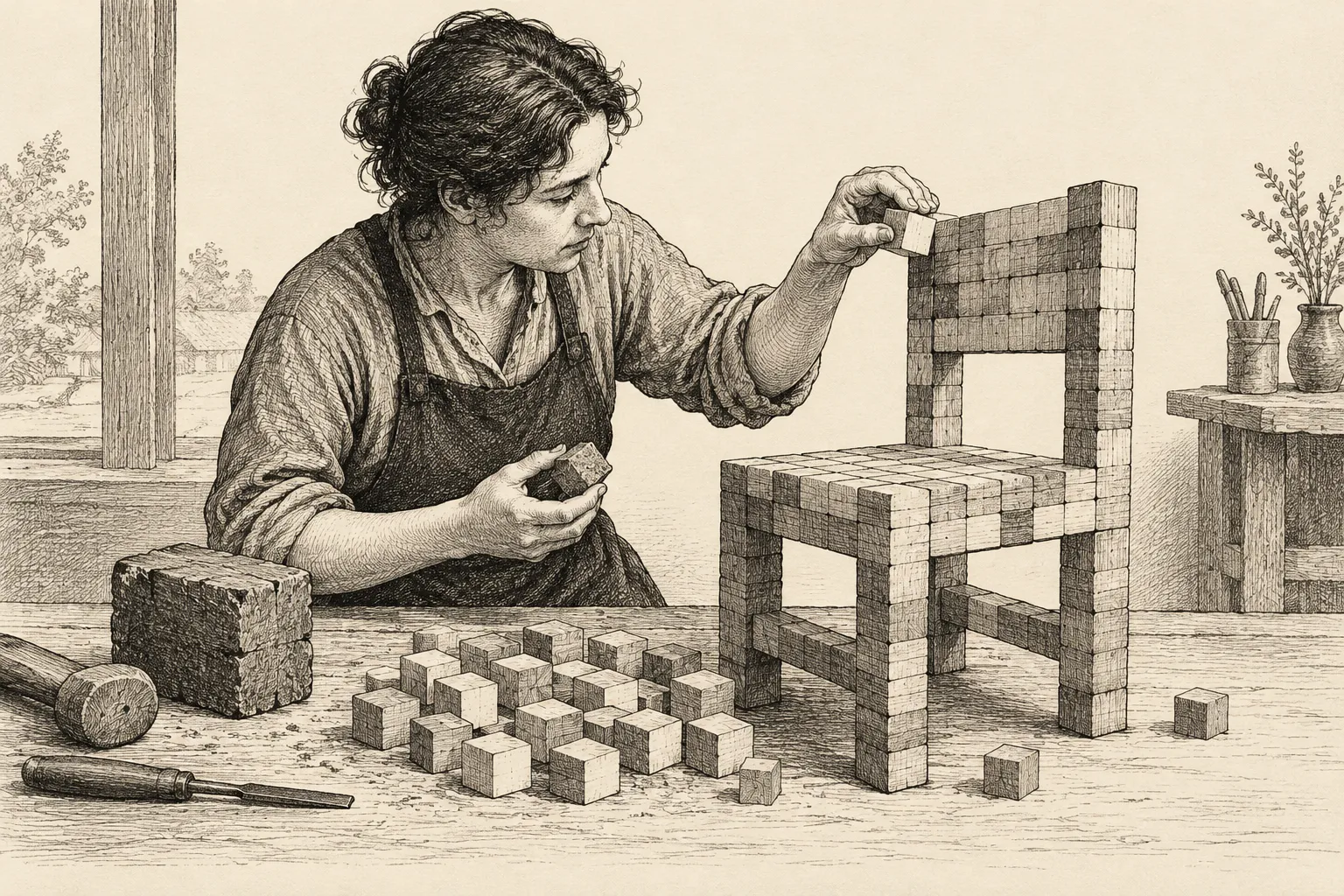
Can an agent learn to spot likely mistakes before starting a task? The authors first let it make an attempt and see what happened. Then one copy predicts pitfalls without seeing that attempt. Another copy sees the completed attempt and guides the first copy's…
3 paper · Original sources linked in every story
5 MINUTES ON PtoP
MIT Technology Review predicts that software helpers will transform the internet, though it says nobody knows whether people will keep browsing websites themselves. That uncertainty raises a practical question: what should a helper know before it acts for us? A research paper on AI agents asks a narrower version. Its authors explore whether an agent can learn to anticipate mistakes before starting a task, rather than discover them only after an attempt fails. See: The Download: the agentic web arrives and the drive for… · Completed attempts may help AI agents anticipate mistakes
The agent researchers train one copy of a model to predict pitfalls without seeing a completed attempt, while another copy uses that attempt to guide its learning. On their math tests, they report that Qwen3.5-4B-Thinking’s average share of successful attempts across eight tries rose from 46.22% with GRPO to 56.25% with GRPO+SRD. The result did not extend to every test: on WebShop, one setup using SRD fell by 3.61 percentage points. These are results from tested tasks, not a promise that an agent will foresee trouble in everyday use. See: Completed attempts may help AI agents anticipate mistakes
There is a related question about what a system keeps track of while it acts. The authors of WorldFoundry argue that a convincing picture cannot, by itself, show whether a model remembers a scene after something changes. Their proposed tools organize model runs and save outputs alongside evidence for judging them. They report a catalog of 270 model entries and 74 benchmarks, but those are catalog counts, not scores showing that the models maintain a lasting record of their surroundings. See: Compare World-Model Tools Without Mistaking Appearance for…
Testing also depends on which people and situations a team can represent. In a Hugging Face Blog announcement, NVIDIA and Elith say they released 9M made-up Japanese profiles, shaped by government counts and public surveys, to help test finance AI without using customer records. NVIDIA says the set may help spot unfair replies, but gives no measured results. Like a saved model run or a completed agent attempt, a made-up profile could give a team something specific to inspect; it cannot settle on its own how a tool will behave with a person. See: Nemotron-Personas-Finance-Japan: A Synthetic Dataset… · Compare World-Model Tools Without Mistaking Appearance for… · Completed attempts may help AI agents anticipate mistakes
Taken together, these items point to a modest habit for living with AI: look for the gap between an answer that seems ready and evidence that it is ready for this situation. If helpers take on more of our browsing or other tasks, that gap might matter more often. This week, if you use an AI helper, could you ask what might go wrong before it acts, then compare that answer with what actually happens? See: The Download: the agentic web arrives and the drive for… · Completed attempts may help AI agents anticipate mistakes · Compare World-Model Tools Without Mistaking Appearance for…
Just here for the stories? They are below, by topic.
PtoP · NEWSLETTER
Six papers and the news, explained in plain English, each morning after the editor approves the issue. Free, and you can unsubscribe at any time.
News and analysis from the sources, separate from the papers. Headlines and dates link to the originals.
THIS ISSUE AT A GLANCE
 ↗02 / NEW / EDITOR PICKSBuild 3D Shapes Without Filling Empty SpaceHow can a computer build a detailed 3D shape without checking every part of empty space? 3D means the…
 ↗03 / TOP VOTED · 6 MONTHSCompleted attempts may help AI agents anticipate mistakesCan an agent learn to spot likely mistakes before starting a task? The authors first let it make an…↗
PODCAST / ENGLISH EDITION
The front-page episode covers the papers and news; each paper also has its own short conversation.
Both voices are AI-generated with OpenAI. This is a scripted editorial conversation, not a recording of the authors.
How can researchers tell whether a system tracks changes instead of making convincing pictures? The authors say a world model must…
How can a computer build a detailed 3D shape without checking every part of empty space? 3D means the shape has height, width, and…
Can an agent learn to spot likely mistakes before starting a task? The authors first let it make an attempt and see what happened…
FROM THE NEWS DESK
Editorial explanations of the sources: examples and possible uses are distinguished from what the source establishes.
Tools and building Hugging Face Blog · 09-11-2026 · company announcement
NVIDIA and Elith released 9M made-up Japanese profiles to help test finance AI without customer records. This is synthetic data: made-up records shaped by government counts and public surveys.
Imagine a made-up retiree asking a bank chat helper whether their savings cover monthly bills.
NVIDIA says the set may help spot unfair replies, but provides no measured results.
Made-up customers may help teams test finance tools without exposing real customer records.
Privacy rules make real bank customer records hard to use for this work. NVIDIA and Elith built the set for teams making finance AI in Japan. They say it covers different jobs, households, and amounts of money people have. Japanese banks, insurers, and a finance group gave advice on its design. Each profile includes financial literacy, meaning how well someone understands money choices. The post gives no test results showing whether the profiles reflect real customer behavior.
A bank could use a persona, or made-up customer profile, to check its chat helper's replies.
Was this explanation easy to understand?
AI agents MIT Technology Review · 02-11-2026 · news report
MIT Technology Review predicts that software helpers will transform the internet. It says nobody knows whether people will keep browsing websites themselves. The outlet also reports that some cities are working to make roads safer despite government delays.
Imagine a helper ordering groceries while a city uses cameras to find a dangerous intersection.
The outlet says red tape, or slow official steps, can delay even proven road-safety changes.
The outlet predicts a transformed internet, but leaves the future of human-browsed websites open. It reports road-safety efforts that government delays can slow.
The outlet says Tim Berners-Lee imagined helpers handling our online tasks in 2001. It calls today’s helpers artificial intelligence (AI) agents, or programs that can act for people. It predicts the agentic web, an internet shaped by these helpers, will inevitably transform the internet. The outlet says nobody knows whether websites made for people to browse will survive. It reports more than 1 million traffic deaths worldwide each year. Some cities are changing streets to prevent deaths, but government delays make those changes difficult.
The outlet says cities can extend curbs, the raised edges of streets, to make roads safer.
Was this explanation easy to understand?
ENGLISH EDITION / PAPER 01 · NEW / EDITOR PICKS
Why it matters to youA convincing video cannot show whether a system remembers a scene after someone changes it. The authors offer a way to organize tools and evidence for checking that difference.
How can researchers tell whether a system tracks changes instead of making convincing pictures? The authors say a world model must keep an internal record of its surroundings. An action should change that record. A new observation should update it again. They present WorldFoundry to run varied systems and keep their outputs with evidence used to judge them.
Hypothetically, someone opens a door in a generated room, then walks away and returns. A lasting change in later predictions would show what the authors mean by persistent state. This door scenario is an illustration, not a reported WorldFoundry test.
The authors say systems need not carry out every operation in their shared framework. They also distinguish whether a setup runs from claims backed by evidence from tests. The supplied text gives no numerical result showing that the cataloged models maintain persistent state. General PtoP note: this source is an arXiv preprint, a paper shared before formal publication. It is not evidence of peer review or deployment.
The authors report a catalog with 270 model entries, 74 benchmarks, and 62 registered metric entries. Benchmarks are tests; metrics are ways to measure results. These numbers count catalog entries, not performance scores. The authors also report validating every model runner under tested configurations. They used a documented end-to-end reference workflow, meaning a recorded process from start to finish.
The authors distinguish a system that makes believable images from one that updates its record after actions and observations. Their shared tools aim to make the evidence behind such claims easier to trace.
Researchers could use the proposed shared process to organize runs and inspect saved outputs. The paper describes tools for research, not a tested workplace use.
FROM PAPER TO PRACTICE
The linked official README provides setup steps, not a guarantee that any particular model will run. You need Linux, a compatible NVIDIA graphics card and driver, Git, and Conda; models may need separate assets or access keys, with possible costs.
An n8n workflow is not needed for this local setup. The paper and linked README do not describe or test an n8n integration.
Was this explanation easy to understand?
ENGLISH EDITION / PAPER 02 · NEW / EDITOR PICKS
Why it matters to youMaking a 3D object from a picture may take less computing work when empty space is skipped. The authors show this approach in tests, not in a working design tool.
How can a computer build a detailed 3D shape without checking every part of empty space? 3D means the shape has height, width, and depth. The authors use voxels, small boxes marking where an object's surface passes. Their JoVox model starts with large boxes and works toward smaller ones. Nearby small boxes help it decide which unfinished large boxes to keep. It predicts two layers of boxes at once and revisits some early choices.
Hypothetically, imagine building a chair from cubes. An early guess might leave too little room for a thin chair leg. JoVox's method can revisit that guess after nearby smaller cubes have appeared. This is an illustration, not a reported chair result.
The authors trained JoVox on about 175 K assets, or objects used for training. TRELLIS.2 was trained on roughly 800 K assets. They say predicting several boxes independently in one step can leave mismatches, even with their revision method. The Toys4k test objects were unseen in training. The ShapeNet comparison covered four object groups. XCube was available for only chair and airplane. This source is a preprint, a paper shared before formal publication. That is a PtoP note about publication status, not a finding.
The authors tested JoVox on unseen Toys4k objects made from pictures. They report an 11% lower voxel Chamfer distance than TRELLIS.2. This score measures the distance between generated boxes and the reference shape; lower is better. At batch size 32, JoVox had 8× higher training throughput on one A100 graphics processor. Batch size is the number of examples processed together. Training throughput is how much training work is completed in a given time. The comparison was with TRELLIS.2's voxel stage using the same backbone, or core network. On ShapeNet, the authors also report the best results across six measures. Those measures were averaged over chair, airplane, table, and rifle.
The authors test whether a model can keep shape detail while processing fewer boxes. They report results for objects made from pictures and for objects made without pictures. These tests concern generated shapes, not finished products.
A possible use is making rough 3D shapes from pictures for a designer to refine. Another is making sets of object shapes without an input picture. The paper tests shape generation, not either workplace use.
FROM PAPER TO PRACTICE
No verified code or model download link appears in the supplied paper, so installation is unverified. This paper-and-pencil exercise needs no account, equipment or stated cost.
An n8n automation example is not appropriate because the paper provides no verified code link or callable service to connect.
Was this explanation easy to understand?
ENGLISH EDITION / PAPER 03 · TOP VOTED · 6 MONTHS
Why it matters to youA failed attempt can reveal a warning that was easy to miss at the start. The authors explore how AI agents might learn that warning before their next attempt.
Can an agent learn to spot likely mistakes before starting a task? The authors first let it make an attempt and see what happened. Then one copy predicts pitfalls without seeing that attempt. Another copy sees the completed attempt and guides the first copy's prediction during training. The agent need not write out those predictions when later doing tasks.
Hypothetical example: an agent writes a program but hardcodes a sample input. Before another attempt, it might predict that reading input incorrectly could cause trouble. This shows what the training aims to teach, not a demonstrated result for this program.
The code-only test removed dynamic sampling. That process normally discards and replaces groups that fail each method's training filter. Its 2B figures describe training success, not the main table's test pass rates. Results did not improve everywhere. On WebShop, Qwen3.5-9B-Thinking with OPSD+SRD fell by 3.61 percentage points compared with OPSD. The authors tested test-time foresight, or predictions before acting during testing, with two base training methods. They used one model size and one seed, a starting setting for randomness. They call part of their explanation a conjecture, meaning they have not established it. They also say hindsight from a model can reinforce errors and biases. Gains on benchmark tests do not establish safety when agents are deployed.
The authors report avg@8 pass rates. For each question, avg@8 averages the share of successful attempts across eight tries. On their math tests, Qwen3.5-4B-Thinking scored 46.22% with GRPO and 56.25% with GRPO+SRD. GRPO compares attempts at the same question; SRD uses completed attempts to train predictions about future mistakes. The main table used SRD predictions about pitfalls alone, not its additional knowledge channel. In a separate code-only test without dynamic sampling, the authors report 0.0% final training success for the 2B reward-only run. Dynamic sampling replaces groups of attempts that do not meet a training filter. Under the same rollout budget, the 2B run with SRD reached 60.6% training success. A rollout budget limits the attempts available for training.
A reward tells an agent whether an attempt worked, but may not explain a failure. The authors' method also uses details from the attempt to train an earlier prediction. Their tests examine whether that extra training signal helps on named tasks.
The authors tested reasoning, code, search, and simulated tasks where agents interact with their surroundings. One possible use is training agents to anticipate mistakes before using tools. The paper does not establish that this approach works reliably in workplaces.
FROM PAPER TO PRACTICE
Installation is unverified: the supplied text names code but provides no verified repository link or commands. This is a conceptual exercise, not a reproduction.
An n8n automation workflow is not appropriate here because the paper tests a training method, not a verified workflow integration.
Was this explanation easy to understand?
COMPARISON
Compare topics, possible uses and limits. Each result remains attributed to its own paper.
| Paper | Central idea | Possible use | Limit |
|---|---|---|---|
| Compare World-Model Tools Without Mistaking Appearance for Understanding | How can researchers tell whether a system tracks changes instead of making convincing pictures? The authors say a world model must keep an internal record of its… | Researchers could use the proposed shared process to organize runs and inspect saved outputs. The paper describes tools for research, not a… | The authors say systems need not carry out every operation in their shared framework. They also distinguish whether a setup runs from… |
| Build 3D Shapes Without Filling Empty Space | How can a computer build a detailed 3D shape without checking every part of empty space? 3D means the shape has height, width, and depth. The authors use voxels, small… | A possible use is making rough 3D shapes from pictures for a designer to refine. Another is making sets of object shapes without an input… | The authors trained JoVox on about 175 K assets, or objects used for training. TRELLIS.2 was trained on roughly 800 K assets. They say… |
| Completed attempts may help AI agents anticipate mistakes | Can an agent learn to spot likely mistakes before starting a task? The authors first let it make an attempt and see what happened. Then one copy predicts pitfalls… | The authors tested reasoning, code, search, and simulated tasks where agents interact with their surroundings. One possible use is training… | The code-only test removed dynamic sampling. That process normally discards and replaces groups that fail each method's training filter… |
ARCHIVE
The last two issues. Every earlier edition is in the archive.
09