One Model Could Help Search Across Text, Pictures, and Sound
How can a search tool link a spoken question to a written passage? The authors built EmbeddingGemma 2 to turn text, images, audio, and…
ISSUE 28/2026 · 29-10-2026
How can a search tool link a spoken question to a written passage? The authors built EmbeddingGemma 2 to turn text, images, audio, and video into comparable number lists. These lists, called embeddings, place related items near each other. They trained the model first…

3 paper · Original sources linked in every story
5 MINUTES ON PtoP
A useful AI answer often begins before the answer: with finding the right material. The authors of EmbeddingGemma 2 report testing a model that can compare text, pictures, sound and video for search. On a test of spoken questions, working directly with audio scored higher than turning speech into text first. That result belongs to the named test, not a workplace trial, but it points to a familiar problem: the clue you need may be in a recording rather than a document. See: One Model Could Help Search Across Text, Pictures, and Sound
Finding a picture is only part of the job; an answer may depend on several details within it. The EvidenceConnect authors made training questions that require models to link related parts of a single image. They report higher scores across their visual tests, including tests that involve more than one image. They also say this training does not directly teach a model to connect events across video frames. So a model might locate the right image yet still need help making sense of everything it shows. See: Training on One Image May Help Models Connect Clues Across… · One Model Could Help Search Across Text, Pictures, and Sound
There is another way to approach that gap: change the guidance around the model. In a separate study, researchers grouped tasks by skills they shared, built practice tasks, and revised the software guiding a fixed AI model. They report higher average scores on both training tests and unseen tests. The reported results used a suitable guidance setup chosen afterward for each instance, not the tested automatic selector. That distinction matters if we imagine an assistant moving between different kinds of work without someone choosing its setup. See: Grouping tasks by shared skills may guide agent improvements
The UK government’s space roadmap brings these questions into a setting where choices have consequences. Its report suggests, for example, that a spacecraft could discard cloudy pictures before sending them to Earth, while calling for safety and dependability checks before wider use. Across these items, a thread emerges: AI could increasingly help decide what to keep, what clues belong together, and what to do next. The papers report test results, while the roadmap offers recommendations; none establishes how dependable such a chain would be in everyday use. See: Artificial Intelligence Roadmap for Space · One Model Could Help Search Across Text, Pictures, and Sound · Training on One Image May Help Models Connect Clues Across… · Grouping tasks by shared skills may guide agent improvements
For people working with AI, the practical question may be less “Can it answer?” than “Can I see what it used?” Better search could surface material, and better visual or task guidance might help connect it, but each step gives a person something different to check. This week, if you use an AI answer to make a choice, could you ask which source it drew on and look at that source yourself before moving on? See: One Model Could Help Search Across Text, Pictures, and Sound · Training on One Image May Help Models Connect Clues Across… · Grouping tasks by shared skills may guide agent improvements
Just here for the stories? They are below, by topic.
PtoP · NEWSLETTER
Six papers and the news, explained in plain English, each morning after the editor approves the issue. Free, and you can unsubscribe at any time.
News and analysis from the sources, separate from the papers. Headlines and dates link to the originals.
THIS ISSUE AT A GLANCE
↗02 / NEW / EDITOR PICKSTraining on One Image May Help Models Connect Clues Across ManyCan practice linking clues in one picture help a model answer other visual questions? The authors built… ↗03 / TOP VOTED · 6 MONTHSGrouping tasks by shared skills may guide agent improvementsCan an agent improve across different tasks by practicing the skills they share? A maze and a puzzle…
 ↗
PODCAST / ENGLISH EDITION
The front-page episode covers the papers and news; each paper also has its own short conversation.
Both voices are AI-generated with OpenAI. This is a scripted editorial conversation, not a recording of the authors.
How can a search tool link a spoken question to a written passage? The authors built EmbeddingGemma 2 to turn text, images, audio, and…
Can practice linking clues in one picture help a model answer other visual questions? The authors built EvidenceConnect to make…
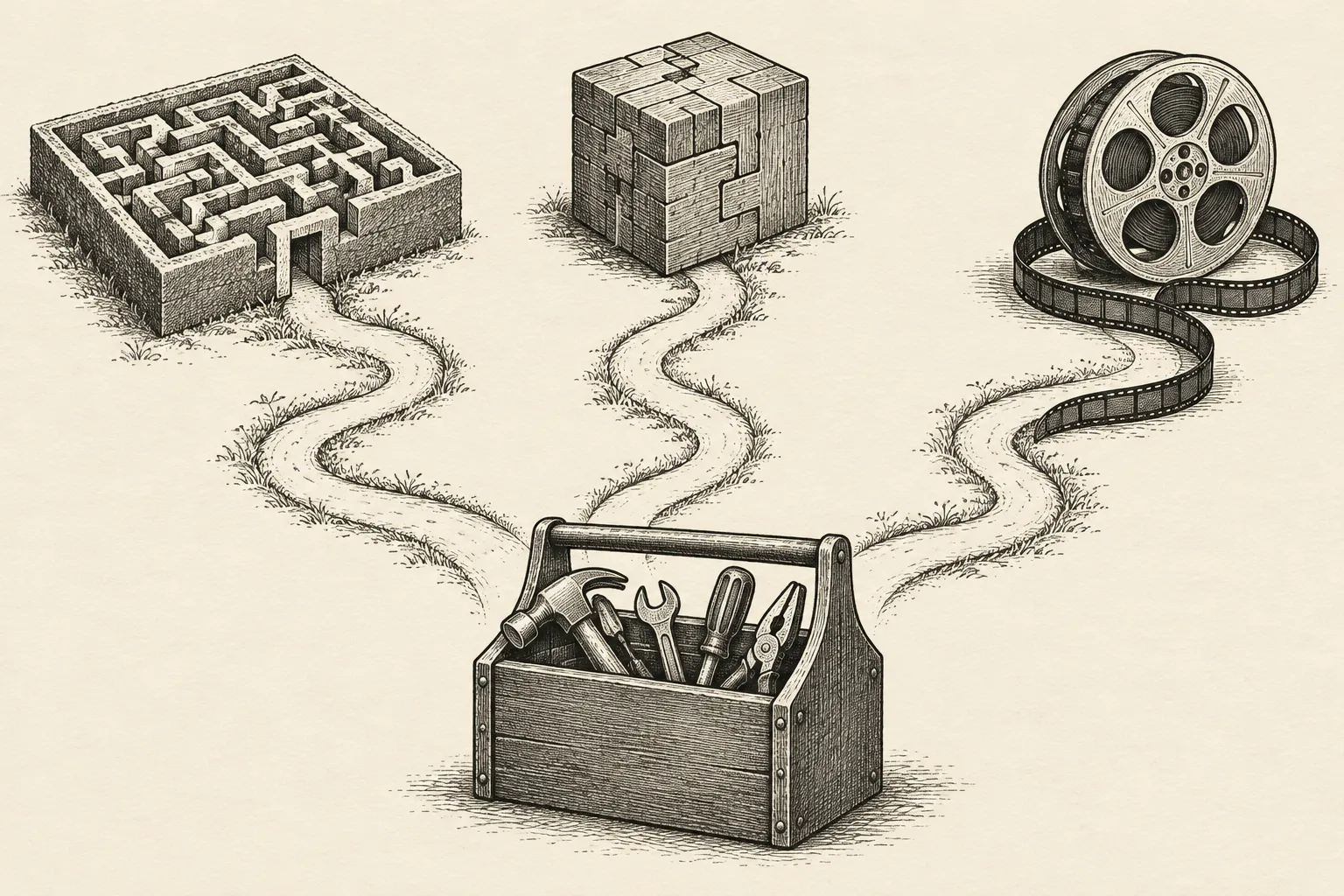
Can an agent improve across different tasks by practicing the skills they share? A maze and a puzzle, for example, can both demand…
FROM THE NEWS DESK
Editorial explanations of the sources: examples and possible uses are distinguished from what the source establishes.
Tools and building Google · 28-10-2026 · company announcement
Google announced Gemini 4 Carbon, its new general artificial intelligence model. That means software designed for varied tasks. Google highlights coding, long engineering jobs, and cybersecurity. Cybersecurity means protecting computer systems from attacks. Early access starts with selected security teams, not the general public.
Imagine a school website has a flaw that could expose private grades. A security team might ask Carbon to find the flaw and suggest a fix.
Google says some outside tests ran without guardrails, or checks meant to limit unsafe use. Its reported results do not show how Carbon will perform for ordinary users.
Google presents Carbon as a stronger helper for difficult coding and security work, but access remains limited.
Google says it launched Gemini 4 Argon two weeks before this announcement. Its researchers want Carbon to handle long coding jobs and help protect software. Google reports benchmark scores, or results from set tests, alongside findings from its own teams. It says it is joining a voluntary U.S. government process for testing before release. Google gives no date for wider access. Results for ordinary users remain unknown.
A software team could use Carbon to check a proposed fix before updating a website.
Was this explanation easy to understand?
Business and strategy GOV.UK · 27-10-2026 · government or regulator
A UK government report describes a ten-year plan to use smarter tools in space. For example, a spacecraft could discard cloudy pictures before sending them to Earth. This uses artificial intelligence (AI), software that learns patterns to help make choices.
Imagine a satellite keeping clear pictures and skipping cloudy ones. The report says a European satellite has tested this approach.
These recommendations do not establish reliability in widespread use. The report calls for validation, meaning safety and dependability checks, before wider use.
The report argues that the UK should focus on space tools people can trust, not just bigger computers.
The UK Space Agency asked Space Professionals Partnership Ltd to develop the plan. The report says more than 100 people and groups helped shape it. European projects have tested picture sorting on satellites, which are machines that orbit Earth. The agency wants UK firms to build trusted tools rather than compete on computing size. The report says most space tests remain small, so wider use is still unproven.
The report suggests using AI to help turn satellite pictures into useful climate information.
Was this explanation easy to understand?
Business and strategy MIT Technology Review · 27-10-2026 · news report
MIT Technology Review reports that Anthropic filed papers for a planned public sale of its shares. It also covers new power equipment and medicines that might offer some benefits of exercise.
Imagine a distant power plant sending electricity to a busy town. A transformer is a device that helps move that power efficiently. The outlet says new solid-state transformers could waste less power, but are still being developed.
The outlet says the power devices are still in development. Researchers still hope to develop the medicines. It remains unclear whether Anthropic's filing will settle questions about its priorities.
The share sale is planned, but its meaning for Anthropic remains open. The two other ideas could help people, but neither is finished.
Anthropic's prospectus is a document for investors that describes its plans and risks. The outlet asks whether the company cares most about safety, profits, or making stronger computer systems. Demand for electricity is rising, while some equipment that moves power is in short supply. Researchers want to help people who struggle to exercise because of illness or disability. No one knows whether the share sale will clarify Anthropic's priorities. The new power devices and exercise-like medicines are still being developed.
If they work, the new devices could help meet rising demand from electric cars and data centers. Data centers are buildings full of computers. Future medicines might help someone too frail, or physically weak, to exercise.
Was this explanation easy to understand?
ENGLISH EDITION / PAPER 01 · NEW / EDITOR PICKS
Why it matters to youFinding a useful file may mean searching notes, photos, recordings, and videos. The authors report tests of one model designed to search across all these kinds of material.
How can a search tool link a spoken question to a written passage? The authors built EmbeddingGemma 2 to turn text, images, audio, and video into comparable number lists. These lists, called embeddings, place related items near each other. They trained the model first on text, then on mixed media, and finally on matching tasks.
Hypothetical example: A museum worker searches for a recording about a cracked vase. A search system might use the model to compare that recording with photo descriptions and notes. This example was not a museum test in the paper.
The authors report a modest decline on English text compared with EmbeddingGemma 1. Their video tests limited the number of frames, so they did not directly index full-length video. They excluded comparison models trained on more than 25% of the test data. General PtoP note: this is a preprint, a paper shared before formal review. Test scores do not establish how well it works in a workplace.
The authors tested EmbeddingGemma 2 on MSEB(Retrieval), a test of searches made with spoken questions. Native audio means the model works directly with sound instead of first turning speech into text. Native audio scored 69.54 using the 577 million-parameter text-and-audio setup. Parameters are values a model learns during training. Turning speech into text first, then using the 271 million-parameter text-only setup, scored 57.59. The score rewards placing a relevant passage near the top of the first ten search results.
A search query and its answer do not always share the same format. The authors report that EmbeddingGemma 2 handles several formats in one shared space. That could make mixed-media search simpler to explore, though the paper does not test these workplace uses.
The authors describe search across media as a use for EmbeddingGemma 2. They also provide text-only, text-and-vision, and text-and-audio ways to run it. The reported scores come from test collections, not workplace trials.
FROM PAPER TO PRACTICE
Conceptual exercise; installation is unverified here. You need a few notes and media files, plus time to review them. Model access requirements and any cost are not stated in the paper.
Proposed integration, not a tested paper feature: an n8n workflow could pass incoming files to a separately set up search service using the model. A later search step could return related items for a person to review.
Was this explanation easy to understand?
ENGLISH EDITION / PAPER 02 · NEW / EDITOR PICKS
Why it matters to youAnswering a question about a picture often means checking several small clues together. The authors report that practicing this skill improved their models on several kinds of visual tests.
Can practice linking clues in one picture help a model answer other visual questions? The authors built EvidenceConnect to make questions from related parts of a single image. Enlarged views help create and check the questions, but the model trains on the full image. They trained three models to choose answers using these questions, then tested them on other tasks.
Hypothetical example: A picture shows several bags, each with a tag and an item beside it. A question might ask which tagged bag sits beside the only umbrella. Answering would require linking the tag, bag, and nearby item. This is an illustration, not a reported test result.
The authors say training on single images does not directly teach links across time or video frames. They tested this training on models up to 27B parameters, not larger models or earlier training stages. Parameters are values inside a model that training can change. At the longest tested inputs, some gains narrowed. The MMLongBench result uses a visual-core subset, not the whole test set. A visual-core subset is a selected part focused on visual tasks. As a general PtoP note, this arXiv preprint is not evidence of peer review or workplace performance. A preprint is a paper shared before peer review.
The authors report accuracy, or the share of questions answered correctly, across 25 benchmarks. Benchmarks are test sets. The overall average rose from 49.41% for Qwen3.5-4B to 54.79% for ZwZ2-4B. On MileBench, a long-context test, it rose from 60.08% to 70.08% for those same models. A long-context test checks whether a model can use information spread across a long input. The authors also report gains for ZwZ2-9B and ZwZ2-27B over their respective base models in the tested settings. A base model is the version before this training.
Training examples for tasks involving many images or interactions can be hard to make. The authors instead made questions from related regions within one image. Their tests suggest that this training can help the named models on some tasks beyond single images.
The authors tested answers to questions about pictures, including tasks involving several images and past information. A possible use would be helping a worker check whether an answer draws on the right picture parts. The paper does not report a workplace deployment.
FROM PAPER TO PRACTICE
A safe paper exercise needs only a picture and something to write with. No model access or paid service is needed; installation from the paper's listed code has not been verified here.
An n8n workflow is not useful here because the article gives no verified steps for connecting this model to that automation tool.
Was this explanation easy to understand?
ENGLISH EDITION / PAPER 03 · TOP VOTED · 6 MONTHS
Why it matters to youWork can mix images, puzzles, and decisions that build on earlier steps. The authors' tests suggest that grouping shared skills might help an AI agent, software that makes choices, handle that mix.
Can an agent improve across different tasks by practicing the skills they share? A maze and a puzzle, for example, can both demand careful tracking of what changed. The authors grouped tasks by such needs and built simpler practice worlds around them. They then changed the harness, the software that guides a fixed AI model, using checked outcomes from practice.
Hypothetical example: An agent, an AI system that takes actions, explores a maze. It then solves a puzzle with changing pieces. A shared note-taking method could help it track what moved in both tasks. This is an illustration, not a reported test result.
The authors say web search may miss benchmarks or return uneven results. Their study mainly changes harnesses, not the AI model itself. Six unseen benchmarks used fixed portions of their official test sets. The robot tests compare whole harness-and-skill setups, so they do not separate the effects of those parts. General PtoP note: This source is a preprint, not a peer-reviewed publication.
The authors report that iteration-four harnesses raised the mean score from 39.06 to 73.16. This average covered 28 training benchmarks, or task tests used during training. Across 18 unseen benchmarks, or task tests not used in training, the mean rose from 37.45 to 63.61. Each mean gives equal weight to task scores placed on a 0–100 scale. These results used separately prepared skills and the best compatible harness chosen afterward for each instance. They did not use the tested router, or selector that chooses a harness.
The authors tested changes to an agent's guidance software while keeping its AI model fixed. Their results concern benchmark tasks, which are standard tests, and two robot tasks. They do not show how the system would perform across everyday workplaces.
A possible use is designing practice tasks around a skill shared by several kinds of work. Another is choosing different guidance software for different tasks. Neither use is a tested workplace deployment in the paper.
FROM PAPER TO PRACTICE
Installation is unverified: The supplied text names GitHub but gives no verified repository address or commands. No account, paid access, or software is needed for this conceptual exercise.
An n8n workflow, a chain of automated app steps, is not appropriate here because the supplied text gives no verified way to run or connect the system.
Was this explanation easy to understand?
COMPARISON
Compare topics, possible uses and limits. Each result remains attributed to its own paper.
| Paper | Central idea | Possible use | Limit |
|---|---|---|---|
| One Model Could Help Search Across Text, Pictures, and Sound | How can a search tool link a spoken question to a written passage? The authors built EmbeddingGemma 2 to turn text, images, audio, and video into comparable number… | The authors describe search across media as a use for EmbeddingGemma 2. They also provide text-only, text-and-vision, and text-and-audio… | The authors report a modest decline on English text compared with EmbeddingGemma 1. Their video tests limited the number of frames, so they… |
| Training on One Image May Help Models Connect Clues Across Many | Can practice linking clues in one picture help a model answer other visual questions? The authors built EvidenceConnect to make questions from related parts of a single… | The authors tested answers to questions about pictures, including tasks involving several images and past information. A possible use would… | The authors say training on single images does not directly teach links across time or video frames. They tested this training on models up… |
| Grouping tasks by shared skills may guide agent improvements | Can an agent improve across different tasks by practicing the skills they share? A maze and a puzzle, for example, can both demand careful tracking of what changed. The… | A possible use is designing practice tasks around a skill shared by several kinds of work. Another is choosing different guidance software… | The authors say web search may miss benchmarks or return uneven results. Their study mainly changes harnesses, not the AI model itself. Six… |
ARCHIVE
The last two issues. Every earlier edition is in the archive.
28