A New Way to Keep Useful Details When AI Shortens Inputs
The study asks how an AI system can summarize many input pieces briefly. Imagine several image pieces showing the same wall and one…
ISSUE 24/2026 · 23-10-2026
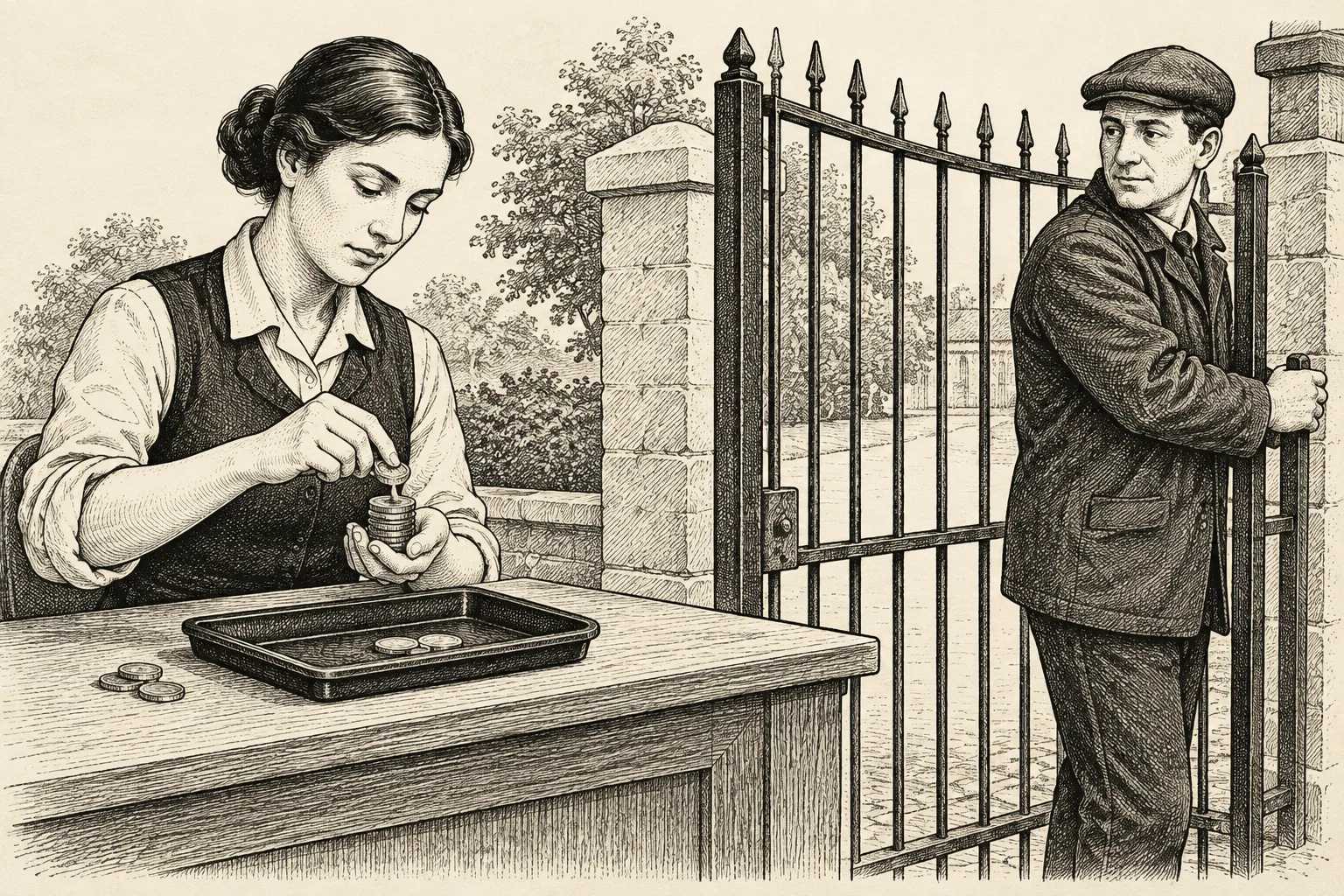
A business request can be finished even if a rule was broken along the way. The authors built BizAgentBench to test computer agents handling linked business requests. It records every action and checks approvals, protected funds, and final goals against the rules. Its…
3 paper · Original sources linked in every story
5 MINUTES ON PtoP
A patch of land can look green from space without telling us what grew there. Google DeepMind says its ForTy map distinguishes natural forests from tree farms, labeling each 10-by-10-meter patch by forest or land type. The company says it identified the right forest type 90% of the time at checked sites, though that does not establish how well its early yearly maps detect change. The visible result—trees—was only part of the story. See: Beyond tree cover: mapping the world’s forest types
That same gap appears when AI has to shorten what it sees. In one preprint, researchers test a way to combine many pieces of text or an image while retaining details that may matter later. On their retrieval tasks, their TTR-Compressor scored 0.5092 on average, against 0.3920 for a method that averages weighted pieces. Those are scores from particular tests, not a promise that every small sign in every image or document will survive compression. See: A New Way to Keep Useful Details When AI Shortens Inputs
For an AI agent doing office work, the missing detail might be a step rather than an image. The authors of BizAgentBench tested agents on simulated payment workflows that check approvals, protected funds and final goals. In their default test, Qwen3.8-27B reached the requested goals in 42.0% of runs but passed every check in 32.7%. A finished request, in other words, did not always mean the simulated process had been followed. See: Check business agents’ actions, not just their final results
Video offers another version of this problem: a shot can contain the requested action without putting events in the requested order. Researchers training a video generator to follow separate shot instructions report a Motion Order score of 61% for FAPL on their text-only shot test, compared with 48% for the original UniVideo (13B). They also say the underlying models still struggle with complex camera movement and realistic acting. Following the brief has several parts. See: Training may help video tools follow separate shot…
The question reaches beyond tests. NVIDIA says government offices could adapt open models for local services while controlling their data and equipment, but reports no measured improvement in public services or demonstration of how well those controls work. In an interview with The Verge, Bill Gates warns that weak AI safety rules pose an urgent risk, while saying firm limits alone would not solve job changes or harmful use. Both accounts leave room for the work of checking what happens in practice. See: NVIDIA GTC Berlin: Live Updates on What's Next in AI · Bill Gates says to prepare for 20 years of ‘tumultuous' AI…
This week, if you use AI to help with a work request, you might write down one condition that matters besides getting an answer—an approval to obtain, or a detail that must not disappear. When you review the result, could you check that condition too? See: Check business agents’ actions, not just their final results · A New Way to Keep Useful Details When AI Shortens Inputs
Just here for the stories? They are below, by topic.
PtoP · NEWSLETTER
Six papers and the news, explained in plain English, each morning after the editor approves the issue. Free, and you can unsubscribe at any time.
News and analysis from the sources, separate from the papers. Headlines and dates link to the originals.
THIS ISSUE AT A GLANCE
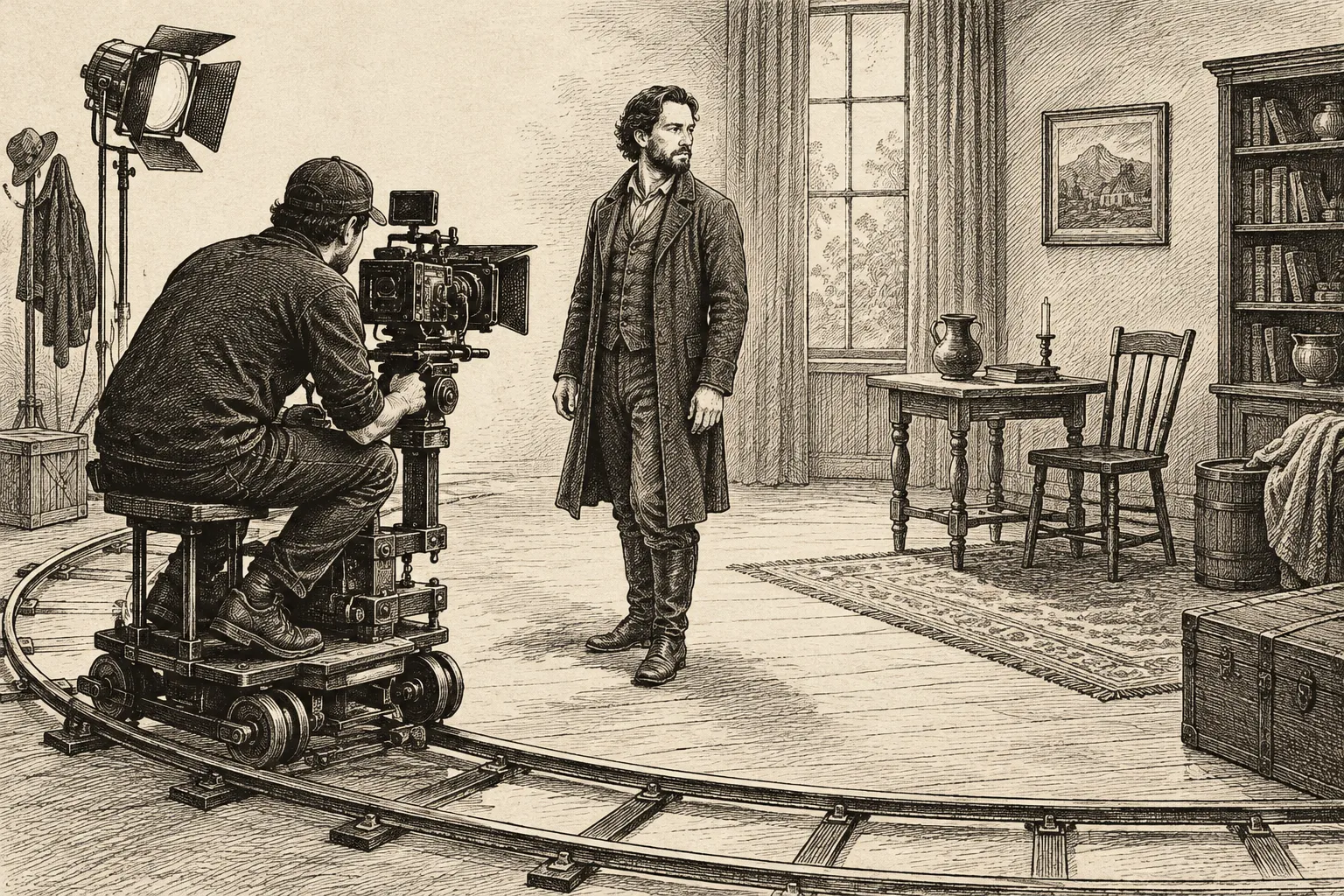
 ↗02 / NEW / EDITOR PICKSTraining may help video tools follow separate shot instructionsThe study asks how a video generator can fill gaps without losing separate shot instructions. A video…
 ↗03 / TOP VOTED · 6 MONTHSCheck business agents’ actions, not just their final resultsA business request can be finished even if a rule was broken along the way. The authors built…↗
PODCAST / ENGLISH EDITION
The front-page episode covers the papers and news; each paper also has its own short conversation.
Both voices are AI-generated with OpenAI. This is a scripted editorial conversation, not a recording of the authors.
The study asks how an AI system can summarize many input pieces briefly. Imagine several image pieces showing the same wall and one…
The study asks how a video generator can fill gaps without losing separate shot instructions. A video generator is a tool that creates…
A business request can be finished even if a rule was broken along the way. The authors built BizAgentBench to test computer agents…
FROM THE NEWS DESK
Editorial explanations of the sources: examples and possible uses are distinguished from what the source establishes.
People and society NVIDIA Blog · 13-10-2026 · updated 23-10-2026 · company announcement
NVIDIA says European government offices could adapt computer tools for local services while controlling their data and equipment. It calls these tools open models: adaptable tools that offices can run on systems they control.
Imagine a town office using its own records to help staff answer residents in their local language.
NVIDIA reports no measured improvement in public services here. It does not show how well the proposed data controls work.
NVIDIA’s central idea is that government offices can tailor these tools while keeping control of their data and computer systems.
NVIDIA presented these plans at its GTC Berlin event. The company says governments want better services without losing control of sensitive information. NVIDIA says its partners and European governments are working together on public administration, meaning government office work. They want to adapt the tools for local languages and services. The page does not say whether these efforts have improved any public service yet.
A public office could adapt a model with local data, meaning information it holds. It could run the tool on infrastructure, the computer systems it controls.
Was this explanation easy to understand?
People and society The Verge · 22-10-2026 · news report
In an interview with The Verge, Bill Gates warns AI could unsettle society for roughly two decades. AI means artificial intelligence: computer systems that can do tasks once done by people. Gates says weak safety rules pose an urgent risk, even though AI also brings benefits.
Imagine a school assistant that can send emails for staff. As a PtoP example, a rule could stop it emailing strangers without permission. Gates argues more generally for firm limits on what AI systems can do.
Gates says we do not yet know how to reliably keep powerful AI within firm limits. He also says those limits alone would not solve job changes or harmful human use.
Gates is not saying disaster is certain. He argues that people should prepare for major change and build safety rules now.
The Verge interviewed Gates after he published an essay calling for action on AI safety. Gates says these systems can already help write code and find weaknesses in computer systems. He worries about harmful uses, changes to jobs, and how people relate to AI. He says governments must help set safety rules because companies compete with one another. The interview does not show how often the harms he describes will happen.
Governments could review powerful AI systems and require safeguards, meaning checks designed to prevent harm. Gates calls for these reviews, but the interview does not explain how they would work.
Was this explanation easy to understand?
Image, audio and video Google DeepMind · 22-10-2026 · company announcement
Google DeepMind says its new map shows whether green land holds natural forests or tree farms. A logged forest replanted with timber trees may still look green from space. Called ForTy, the map labels each 10-by-10-meter patch by forest or land type. The company also released early yearly maps showing changes from 2017 to 2025.
Imagine a cocoa farm replacing a forest; both may look green in overhead pictures. The new maps aim to show that switch, not merely whether trees remain.
DeepMind says ForTy identified the right forest type 90% of the time at checked sites. That result does not establish how well its early yearly maps detect changes.
Seeing trees is not enough: knowing what kind they are helps reveal forest loss.
Earlier maps mostly showed tree cover, meaning where trees stand, not how people use them. Google DeepMind and Google Research worked with two research groups to make this map. Their earlier 2020 map separated natural forest, which grows without planting, from other tree cover. The groups want companies and officials to identify land changed into farms or tree plantations. DeepMind says it plans to improve the early yearly maps over the coming months. It does not state how accurately those yearly maps identify changes.
A cocoa buyer could use the maps to flag land for closer checks before purchasing.
Was this explanation easy to understand?
ENGLISH EDITION / PAPER 01 · NEW / EDITOR PICKS
Why it matters to youLong documents and detailed images can give an AI system many pieces to handle. This study suggests a way to shorten those inputs while keeping details the system may need.
The study asks how an AI system can summarize many input pieces briefly. Imagine several image pieces showing the same wall and one showing a small sign. The authors use those pieces as observations in a regression, a rule fitted to data. Its fitted coefficients are the rule’s values and become the compact summary. The fit also considers how similar the pieces are.
Hypothetical example: An image contains many pieces of plain sky and one piece showing a distant sign. A merger must turn nearby pieces into fewer tokens. The authors’ approach fits its summary using the pieces together, rather than adding each piece separately.
The authors tested particular trained models and benchmarks, or sets of tests, not workplace deployments. In their short-context language tests, sparse attention did not turn on. Sparse attention is a method that selects which parts of an input to focus on. So the compressor was not used during inference, when the model runs on an input. The paper does not report whether the method preserves every detail in an arbitrary document or image. PtoP note: This source is an arXiv preprint, a paper shared before any claim of peer review.
For retrieval, or finding information, the authors tested a 345M-parameter language model on RULER tasks. Parameters are learned model settings, and these tasks require finding information among distractions. Its TTR-Compressor had average accuracy of 0.5092, compared with 0.3920 for attention-weighted pooling. Attention-weighted pooling averages pieces after giving each its own weight. These scores count correct retrieval answers. Separately, in image tests, 3 × 3 merging combined groups of nine pieces. By comparison, 2 × 2 merging combined groups of four. Across the listed image benchmarks, or sets of tests, the convolutional TTR-Compressor variant averaged 54.85 with 3 × 3 merging. Convolutional means this variant also uses nearby pieces when making its summary. That was close to the standard MLP merger’s 54.93 with 2 × 2 merging. An MLP merger is a learned model component that combines pieces. Those image figures are benchmark averages, not results from one accuracy test.
Shortening an input can save later processing, but discarded details cannot be recovered. The authors report results for finding information in long text and handling merged image pieces. Those are model tests, not evidence of a deployed service.
The authors tested the compressor in two model settings. In one, summaries help a language model choose which distant text blocks to read. In the other, merged image pieces become input to a model that handles both images and language.
FROM PAPER TO PRACTICE
Installation is unverified; use this conceptual exercise instead. Prerequisites: paper, pencil, and a short sample paragraph; no model access or cost is needed.
A proposed integration could send a document from an n8n workflow tool to a separately built summarizing service. The paper does not test an n8n workflow or provide setup instructions for one.
Was this explanation easy to understand?
ENGLISH EDITION / PAPER 02 · NEW / EDITOR PICKS
Why it matters to youPlanning a video shot often means describing the action and camera movement without detailing every moment. This study explores how a video tool might fill those gaps while following separate instructions.
The study asks how a video generator can fill gaps without losing separate shot instructions. A video generator is a tool that creates video from instructions. The authors first train it to use information from a model that reads text and images. They also train it with pairs of videos where just one part changes, such as the character. Finally, they train the reading model with both descriptions and complete videos. During that step, they keep the video generator fixed.
Hypothetical example: A creator describes someone opening a box while the camera moves around them. The creator then changes only the camera instruction. The desired edit would keep the person, place, and action while changing the camera movement.
The authors say the underlying models still struggle with 3D blockouts, complex camera movement, and realistic acting. 3D blockouts are rough three-dimensional plans for a shot. Their single-shot test cases came from held-out groups of sources also used to build training data. They report that no source videos overlapped with their training data. The source is a preprint, a paper released before peer review is established. As a general PtoP note, being a preprint does not establish that experts reviewed it.
On the paper’s text-only shot test, the authors report a Motion Order score of 61% for FAPL. Text-only means the test uses descriptions without video as input. Motion Order checks whether actions appear in the requested order. The original UniVideo (13B) scored 48% on that same test. The authors also report better FAPL scores for editing just one part of a shot. They report better scores for keeping details consistent across related shots, too.
Changing one detail in a shot should not silently change the rest. The authors report that their training approach improved several measures of following instructions in their tests. These are benchmark results, not tests of a working production tool.
The authors test making videos from descriptions, editing one part of a shot, and creating related shots. Their setup for making videos can also use optional character or scene references. Using descriptions alone applies to the paper’s text-only evaluation setting, not every setup. Here, text-only means using descriptions without video as input.
FROM PAPER TO PRACTICE
This is a paper-and-pencil exercise, not a tested installation. You need only the paper and a way to write; installation, model access, and costs are unverified.
An n8n workflow is not appropriate here because the supplied paper gives no verified model service or installation steps to connect.
Was this explanation easy to understand?
ENGLISH EDITION / PAPER 03 · TOP VOTED · 6 MONTHS
Why it matters to youA completed work request may hide a missed approval or an account balance that fell too low. This paper shows how a simulated test can look for those mistakes along the way.
A business request can be finished even if a rule was broken along the way. The authors built BizAgentBench to test computer agents handling linked business requests. It records every action and checks approvals, protected funds, and final goals against the rules. Its simulated workflows are practice versions of one payments company’s procedures, with sensitive details changed.
Hypothetically, an agent could pay a bill and later restore the account balance. The bill would be paid, but the balance might have fallen below a required minimum in between. Checking only the ending would miss that temporary breach.
The authors rebuilt the workflows and changed sensitive business details instead of sharing the original rules. The tests use a simulated customer and separate database copies, not live payments. Their reference runs show a valid way to complete each task, not the shortest way. PtoP note: this is an arXiv preprint, a research paper shared before formal publication. A result from a simulation does not show what would happen in a live business.
In the authors’ default test, Qwen3.8-27B ran three times on each of 50 tasks. It reached the requested goals in 42.0% of runs. It passed every goal, process, and protection check in 32.7% of runs. These scores count runs in the simulated test, not live business outcomes.
The authors separate finishing a request from following its rules throughout. That distinction matters when a later fix cannot undo an earlier mistake.
A team could use this kind of test to check whether an agent gets approvals before acting. The paper tests simulated payment workflows; it does not report use in a live business.
FROM PAPER TO PRACTICE
This is a conceptual exercise; installation is unverified because the supplied text gives no verified setup instructions. Prerequisites are a fictional request, its rules, and a way to note each action; no service access is needed, and any software cost is unknown.
n8n, a tool for linking work steps, is not appropriate here because the paper supplies no verified setup for connecting it to the simulated tools.
Was this explanation easy to understand?
COMPARISON
Compare topics, possible uses and limits. Each result remains attributed to its own paper.
| Paper | Central idea | Possible use | Limit |
|---|---|---|---|
| A New Way to Keep Useful Details When AI Shortens Inputs | The study asks how an AI system can summarize many input pieces briefly. Imagine several image pieces showing the same wall and one showing a small sign. The authors use… | The authors tested the compressor in two model settings. In one, summaries help a language model choose which distant text blocks to read… | The authors tested particular trained models and benchmarks, or sets of tests, not workplace deployments. In their short-context language… |
| Training may help video tools follow separate shot instructions | The study asks how a video generator can fill gaps without losing separate shot instructions. A video generator is a tool that creates video from instructions. The… | The authors test making videos from descriptions, editing one part of a shot, and creating related shots. Their setup for making videos can… | The authors say the underlying models still struggle with 3D blockouts, complex camera movement, and realistic acting. 3D blockouts are… |
| Check business agents’ actions, not just their final results | A business request can be finished even if a rule was broken along the way. The authors built BizAgentBench to test computer agents handling linked business requests. It… | A team could use this kind of test to check whether an agent gets approvals before acting. The paper tests simulated payment workflows; it… | The authors rebuilt the workflows and changed sensitive business details instead of sharing the original rules. The tests use a simulated… |
ARCHIVE
The last two issues. Every earlier edition is in the archive.
22